Why Am I So Tired in Winter? The Science and the Fixes
Every November it happens. The clocks fall back, the sun is gone by late afternoon, and suddenly I’m dragging myself through the day like I’m wading through wet sand. If you’ve been asking yourself “why am I so tired in winter?”, you’re not imagining it, and you’re not lazy. There are real, measurable reasons your body feels heavier when the days get short.
I learned a lot of this the hard way. During my years on rotating shifts, winter was always the toughest stretch. Some weeks I’d drive to work in the dark, work under fluorescent lights, and drive home in the dark again. I didn’t see real daylight for days at a time, and my energy showed it. It took me far too long to realize that light, not just hours in bed, was a big part of the problem.
In this post I’ll walk through what the science says about winter tiredness, how to tell normal seasonal sluggishness from something that needs a doctor, and the practical fixes that make the biggest difference.
Is It Normal to Feel More Tired in Winter?
For most people, yes, at least to a degree. Humans are seasonal creatures, even if modern life with its electric lights and fixed work hours tries to pretend otherwise.
One of the more interesting pieces of evidence comes from a 2023 study out of Berlin, published in Frontiers in Neuroscience. Researchers looked at overnight sleep-lab recordings (polysomnography) from 188 patients at a sleep clinic, spread across the year. Patients could sleep at their preferred times without alarms. In winter, total sleep time ran up to about an hour longer than in summer, although that difference wasn’t statistically significant. REM sleep, the dreaming stage, was about 30 minutes longer in winter than in spring, and that difference was significant.
The researchers were careful with their conclusions. These were sleep-clinic patients, not healthy volunteers, the monthly groups were small, and it was a single year of data. But the authors suggested people may need more sleep in winter and might benefit from going to bed earlier, while noting this needs to be confirmed in healthy people. If you want a refresher on why REM matters, I covered it in What Is REM Sleep?
Reason 1: Less Daylight Throws Off Your Body Clock
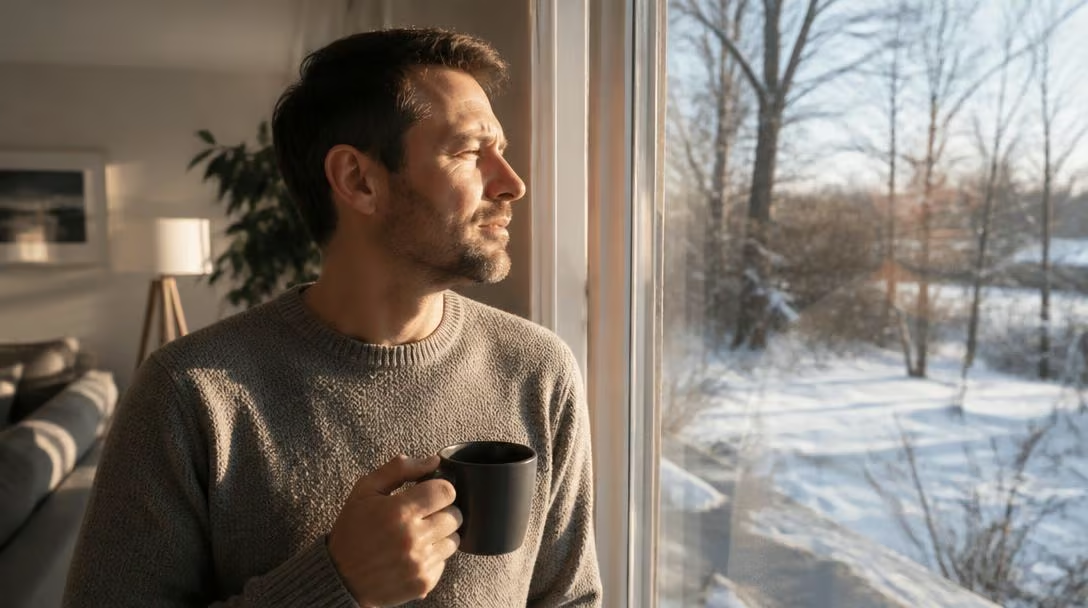
Light is the single strongest signal your internal clock uses to set itself. Bright morning light tells your brain “the day has started,” which helps shut down melatonin (the hormone that makes you sleepy) and sets you up to feel alert. When that signal arrives late, weak, or not at all, your clock drifts and melatonin can linger into the morning.
Dr. Luisa Bazan, a sleep medicine specialist at Henry Ford Health, puts it simply: “Less exposure to sunlight during the winter months affects our internal clock.” Shorter days, she explains, can disrupt your circadian rhythm and increase melatonin.
Here’s the part that surprised me. Indoor light is much dimmer than daylight, even on a gray winter day. Your living room or office might feel bright to your eyes, but to your body clock it’s a weak signal. That’s why staying inside all day in winter can leave you feeling groggy even if you slept a full night.
The fall clock change adds to this. When daylight saving time ends, the evening gets dark an hour earlier, and many of us lose our after-work daylight entirely. I wrote more about that shift in Daylight Saving Time Ends: How to Protect Your Sleep.
Reason 2: Your Routine Shifts Without You Noticing
Winter quietly changes how we live. We move less, spend more time on the couch, eat heavier food, and often stay up later in front of screens because there’s not much else to do once it’s dark at 5 p.m. None of these feel dramatic, but together they add up.
- Less movement. Fewer walks, less yard work, and skipped workouts mean less of the daytime activity that helps build healthy sleep pressure by bedtime.
- Later, irregular bedtimes. Long, dark evenings make it easy to drift later, then hit the snooze button in a dark bedroom the next morning.
- Bigger, later meals. Comfort food and holiday eating can leave you sluggish in the afternoon and restless at night.
- Overheated bedrooms. With the furnace running, many bedrooms end up warmer and drier than is ideal for sleep. I covered the ideal sleeping temperature in Do You Sleep Better in the Cold?
Reason 3: Vitamin D Tends to Run Lower
Your skin makes vitamin D when it’s exposed to sunlight. In winter, especially if you live in the northern US or Canada, you get far less of that exposure: the sun is lower, the days are shorter, and most of your skin is covered when you do go out.
According to the NIH Office of Dietary Supplements, people who seldom expose their skin to sunshine, older adults, and people with darker skin are among those at higher risk of getting too little vitamin D. The NIH also notes that your skin doesn’t make vitamin D from sunlight through a window, so sitting by a sunny window at work doesn’t count.
Low vitamin D is commonly mentioned as a factor in winter fatigue, and the Henry Ford sleep team lists vitamin D deficiency among the things worth checking if you’re persistently tired. That said, the evidence linking vitamin D supplements to better energy or mood isn’t settled. The National Institute of Mental Health describes the research on vitamin D for seasonal depression as having mixed results.
If you’re wondering about supplements, here are the mainstream numbers from the NIH:
- Recommended daily amount for adults 19 to 70: 15 mcg (600 IU)
- Adults 71 and older: 20 mcg (800 IU)
- Upper limit for adults from all sources: 100 mcg (4,000 IU) per day
More is not better. Too much vitamin D can cause nausea, muscle weakness, confusion, and kidney stones, and it can interact with some medications, including steroids, certain statins, orlistat, and thiazide diuretics. The best move is to ask your doctor to check your level with a simple blood test before you start supplementing, and check with your doctor or pharmacist about the right amount for you. Food sources like fatty fish, fortified milk, and fortified cereals help too.
Reason 4: It Might Be More Than the Winter Blues
Feeling a little flat and sleepy when the days are short is common. But for some people, winter brings something more serious: seasonal affective disorder, or SAD.
The National Institute of Mental Health describes SAD as a type of depression that comes and goes with the seasons, with symptoms lasting about 4 to 5 months of the year. Winter-pattern SAD has some telltale signs on top of low mood:
- Oversleeping (sleeping much more than usual and still feeling tired)
- Overeating, especially craving carbohydrates, often with weight gain
- Pulling away from friends and social plans
According to NIMH, SAD is more common in women and in people who live farther north, where winter days are shorter. It usually starts in young adulthood. If the symptoms in that list sound familiar and they keep you from functioning normally, that’s a reason to talk to a doctor, not just tough it out. Effective treatments exist, including light therapy, a form of CBT adapted for SAD, and medication.
Here’s a quick way to think about the difference:
| Sign | Ordinary winter tiredness | Worth raising with a doctor |
|---|---|---|
| Energy | Slower mornings, lifts with light and activity | Exhausted most days despite enough sleep |
| Sleep | Want a bit more, harder to get up | Sleeping far longer and never feeling rested |
| Mood | A little flat on gray days | Low most of the day, losing interest in things |
| Daily life | Still working and socializing normally | Pulling away, struggling at work or home |
If you ever have thoughts of harming yourself, don’t wait for an appointment. In the US you can call or text 988 to reach the Suicide and Crisis Lifeline, and in an emergency call 911.
Other Things That Can Make Winter Fatigue Worse
Winter is also when other problems hide behind the “it’s just the season” excuse. Dr. Bazan notes that persistent fatigue can point to a vitamin D deficiency, SAD, or a chronic condition, and she specifically mentions sleep apnea and restless legs syndrome.
That one hits home for me. Sleep apnea is easy to blame on something else, and winter gives you the perfect cover story. If you snore loudly, your partner notices pauses in your breathing, or you wake up with headaches and a dry mouth, read What Is Sleep Apnea? and talk to your doctor. No amount of morning light fixes a breathing problem at night.
How to Beat Winter Tiredness: What Actually Helps

The good news is that most winter fatigue responds to a handful of simple habits. These are the ones I’d put at the top of the list.
1. Get bright light early, every day
This is the big one. Open the blinds as soon as you wake up, and try to get outside within the first hour or two of your day, even for a short walk. A gray winter morning outdoors is still far brighter than your kitchen. If you work from home, take your coffee to the porch or walk around the block before you sit down at the desk.
If you leave for work in the dark and get home in the dark, a light box can help fill the gap. NIMH describes light therapy for SAD as sitting in front of a 10,000-lux light box for about 30 to 45 minutes, usually in the morning, from fall to spring. I compared several options in my guide to SAD lamps. If you have an eye condition, bipolar disorder, or take medication that makes you sensitive to light, check with your doctor before using one.
2. Keep the same wake time all week
It’s tempting to sleep in on dark weekend mornings, but a wildly shifting wake time makes Monday feel brutal. Pick a wake time you can keep seven days a week, and if your body wants more sleep in winter, give it that sleep by going to bed a bit earlier rather than sleeping in later. My step-by-step reset is in How to Fix Your Sleep Schedule.
If the dark mornings are what’s killing you, a sunrise alarm clock that slowly brightens before your alarm can make getting up feel less like being yanked out of a cave.
3. Move your body, ideally outside and earlier in the day
The Henry Ford sleep team recommends exercising in the morning, ideally outdoors, and finishing workouts several hours before bed. A brisk outdoor walk gets you light and movement at the same time, which is about as efficient as it gets.
4. Nap smart, not long
A short nap can rescue a rough afternoon, but a long late nap steals from your night. Henry Ford’s guidance is about 20 minutes, between noon and 3 p.m. I go deeper on nap timing in How Long Should a Nap Be?
5. Time your caffeine
Caffeine can help on a dark morning, but more cups later in the day is a trap. Keep it to the morning and early afternoon so it isn’t still in your system at bedtime.
6. Keep your bedroom cool, dark and comfortable
Turn the thermostat down at night if you can, and use a humidifier if the furnace leaves the air bone-dry. Keep the room dark at night, then let the light in fast in the morning.
7. Watch the winter extras
Heavy late meals, extra drinks at holiday parties, and late-night screen marathons all make winter sleep worse. You don’t need to give up the season’s fun, just notice which nights leave you wrecked the next day.
If you want all of this in one place, grab my Free Sleep Checklist. It’s the same set of basics I come back to every winter.
When to See a Doctor About Winter Tiredness
Winter sluggishness that improves with light, movement and a steady schedule is usually nothing to worry about. Talk to your doctor if:
- You’re still exhausted after a few weeks of getting enough sleep and daily daylight.
- You’re sleeping far more than usual and never feel rested.
- Your mood is low most days, you’ve lost interest in things you enjoy, or you’re pulling away from people.
- You snore loudly, gasp or stop breathing in your sleep, or wake with headaches.
- You have an uncomfortable urge to move your legs in the evening or at night.
- You’re thinking about vitamin D or other supplements, especially if you take regular medications.
Your doctor can check things like your vitamin D level and rule out other causes of fatigue. If a sleep disorder is suspected, a referral to a sleep clinic is the right next step.
Frequently Asked Questions
Why am I so tired in winter even when I sleep 8 hours?
Often it’s light, not hours. With less morning daylight, your body clock can drift and melatonin can hang around into the morning, so you feel groggy even after a full night. Getting outside early, keeping a steady wake time and moving more usually help. If you’re still exhausted after a few weeks, see your doctor to rule out sleep apnea, low vitamin D, SAD or another cause.
Do we need more sleep in winter?
Possibly. A 2023 sleep-lab study in Berlin found people slept up to about an hour longer in winter than summer (not statistically significant) and got about 30 minutes more REM sleep in winter than spring. The researchers suggested going to bed earlier in winter may help but said this needs to be confirmed in healthy people.
Is winter tiredness the same as seasonal affective disorder?
No. Mild winter sluggishness is common. SAD is a type of depression that returns with the seasons, lasts about 4 to 5 months a year, and in winter often includes oversleeping, carb cravings and social withdrawal. If your mood and daily life are affected, talk to a doctor.
Should I take vitamin D for winter fatigue?
Ask your doctor to check your level first. The NIH recommends 600 IU a day for adults up to 70 and 800 IU for those over 70, with an upper limit of 4,000 IU a day for adults. The evidence that supplements improve energy or mood is mixed, and vitamin D can interact with some medications, so check with your doctor or pharmacist before you start.
The Bottom Line
If you’re asking “why am I so tired in winter?”, the short answer is that less daylight, shifting routines and lower vitamin D all pull in the same direction, and your body may simply want a bit more sleep this time of year. Start with morning light, a steady wake time and some daily movement. Give it a couple of weeks. If you’re still running on empty, or your mood is sinking with the sun, that’s your cue to talk to a doctor. Winter is long enough without spending all of it exhausted.
Sources
- Seidler A, Weihrich KS, Bes F, de Zeeuw J, Kunz D. Seasonality of human sleep: Polysomnographic data of a neuropsychiatric sleep clinic. Frontiers in Neuroscience, 2023.
- National Institute of Mental Health. Seasonal Affective Disorder.
- NIH Office of Dietary Supplements. Vitamin D Fact Sheet for Consumers.
- Henry Ford Health. Winter fatigue: why you feel more tired in winter (Dr. Luisa Bazan).