Sunrise Alarm Clocks: Do They Really Help You Wake Up?
The worst alarm I ever had was a cheap plastic clock that went from dead silence to full-volume shrieking at 4:45 a.m. Back when I worked rotating shifts, the early rotation in January meant getting up in pitch darkness for weeks at a time, and that clock made every single one of those mornings feel like being dragged out of a cold lake. I’d stumble around for half an hour feeling drugged.
Sunrise alarm clocks promise a different way to wake up: instead of a blast of noise, a light by your bed slowly brightens over 20 to 60 minutes, like a sunrise squeezed into your bedroom, so your body starts waking before the alarm sound ever kicks in. It sounds lovely. The question is whether a sunrise alarm clock actually does anything, or whether it’s just a pricey nightlight. Here’s what the research says, who they help most, what to look for, and a few top picks based on published specs and reviews.
Affiliate disclosure: some links in this post are Amazon affiliate links. If you buy through them, Deep Sleep Mastery may earn a small commission at no extra cost to you. I haven’t personally tested the clocks below; the picks are based on published specs, features and the overall pattern of owner and expert reviews.
How a Sunrise Alarm Clock Works
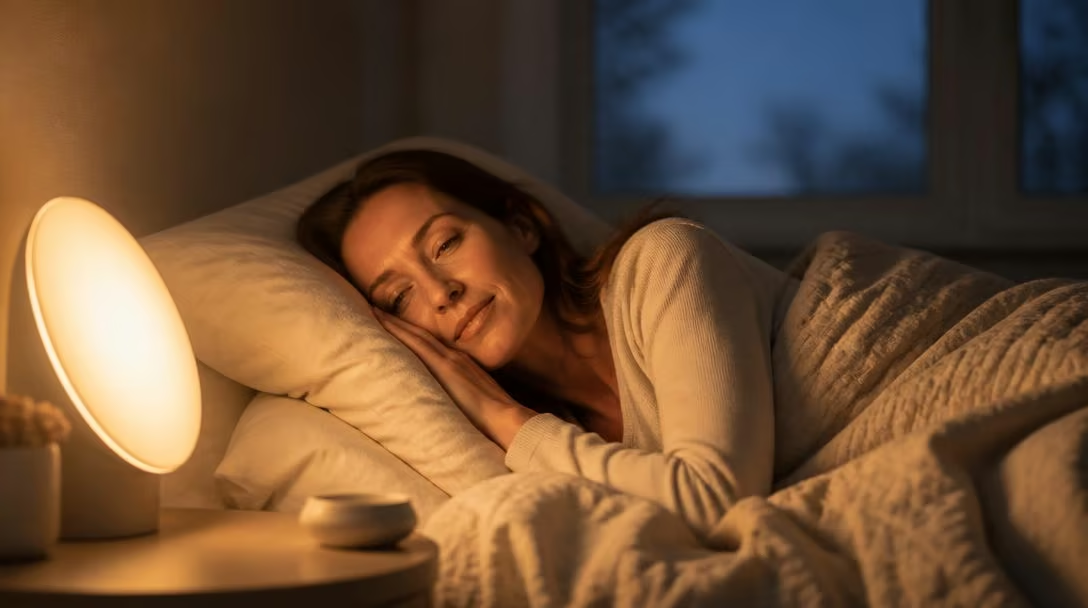
A sunrise alarm clock (also called a wake-up light or dawn simulator) is a bedside lamp with a timer. You set your wake-up time, and the light starts glowing a dim red or orange some time beforehand, usually 20 to 60 minutes depending on the model. It gradually brightens and shifts toward a warmer yellow-white, reaching full brightness right around your alarm time. Most add an optional sound at the end, such as birdsong, waves or a radio station, as a backup.

Many models also run the process in reverse at night. A “sunset” mode slowly dims the light over a set period so you can wind down without staring at a phone screen or a bright ceiling light.
The idea behind all of this is simple. Light is the strongest signal your body clock gets. According to the National Institute of General Medical Sciences (NIH), your circadian rhythms are set by a master clock in the brain, and light is the main cue that keeps it in sync with the day. Your eyelids are thin enough to let some light through, so a slowly brightening room can start nudging you toward lighter sleep before you’re fully awake.
Why Waking Up in the Dark Feels So Rough
If you’ve ever woken up feeling worse than when you went to bed, you’ve met sleep inertia: that heavy, groggy, slow-thinking state that hangs on after waking. It’s usually worst when an alarm yanks you out of deep sleep. (If you want the background, I covered the stages in what deep sleep is and why it matters.)
In summer, daylight around the curtains starts that wake-up process for you. In late fall and winter, especially after the clocks fall back, many of us get up well before sunrise, while the body clock is still in night mode.
That’s the exact gap a sunrise alarm clock tries to fill. It doesn’t make you need less sleep. It just tries to give your body a “sunrise” at the time you actually need to be up.
Do Sunrise Alarm Clocks Really Work? What the Research Says
Short answer: there’s real but modest evidence, mostly from small studies. Honest answer: they help some people a lot, others barely notice, and they won’t fix a sleep problem caused by too little sleep. The Sleep Foundation makes the same point, noting there’s limited evidence on whether they improve sleep or overall health. Here’s what the better studies found.
Sleep quality in winter
A Finnish community trial published in BMC Psychiatry gave dawn simulators to 100 volunteers over an eight-week winter period. People alternated two weeks with the device and two weeks without, so each acted as their own control. Among the 77 who finished, self-rated sleep quality improved while they were using the dawn simulators. The benefit showed up after about six days of use and faded once they stopped. The researchers called the benefit modest and said more research was needed.
Morning alertness and thinking
A Swiss lab study in Behavioural Brain Research tested a prototype Philips wake-up light on 17 young men after a night of sleep cut to six hours. The light rose from darkness to about 250 lux over the 30 minutes before waking. Compared with waking in dim light, the dawn simulation led to better scores on several attention and working-memory tasks, though not on every test. People who did worst on the hardest memory task benefited most. It’s a small study, but it lines up with what many users report.
Winter low mood
The strongest evidence is for seasonal depression. In a controlled trial in the American Journal of Psychiatry, researchers compared naturalistic dawn simulation with standard bright light therapy (a 10,000-lux light box for 30 minutes after waking) in 99 adults with seasonal affective disorder. Symptoms improved by about 50% with dawn simulation and 57% with bright light, a difference that wasn’t statistically significant, while a low-dose placebo device managed about 23%. The authors concluded dawn simulation is an active treatment and a possible alternative to a light box.
One important caveat: that study used a carefully designed dawn signal under medical supervision. If you think you’re dealing with seasonal depression, not just the winter blahs, talk to your doctor. A bedside gadget isn’t a substitute for proper assessment and treatment.
What this adds up to
- Likely to help: people who wake in the dark, people who feel groggy for a long time after waking, and people who hate jarring alarms.
- Might help: mood and energy on dark winter mornings, and getting up at a steadier time.
- Won’t help: chronic short sleep, insomnia, sleep apnea or any other sleep disorder. If you’re exhausted every day despite seven to nine hours in bed, see a doctor or sleep clinic.
Who Gets the Most Out of a Sunrise Alarm Clock
From the research and the overall pattern of reviews, these are the people who tend to get the most out of one:
- Early risers in fall and winter. If your alarm goes off before sunrise for months at a time, this is the main use case.
- Shift workers on early rotations. I wish I’d had one during those 4:45 a.m. Januaries.
- Light sleepers. People who wake easily often respond to light alone and may never hear the sound.
- People with hearing loss. The Sleep Foundation points out that a light-based alarm can work well for people who can’t rely on sound.
Who may be disappointed: very heavy sleepers. Plenty of reviewers say they sleep right through the light and need the sound backup. That’s fine; just set a sound you’ll actually hear.
What to Look For in a Sunrise Alarm Clock
Most sunrise alarm clocks cost between $50 and $200, according to the Sleep Foundation, with basic models around $30 and smart models going well past $250. Here’s what actually matters when you compare them.
Brightness at full sunrise
A light that’s too dim won’t do much. The lab study above used about 250 lux at eye level. Many budget clocks don’t list lux at all, so check reviews for comments on how much of the room it lights up.
Adjustable sunrise length
Look for a choice of sunrise durations, ideally from about 20 to 40 minutes or longer. Some people do better with a long, slow ramp; others find the light wakes them too early and prefer a shorter one.
Light color and quality
Good wake-up lights start with a deep red or orange and move toward warm white, the way a real sunrise does. Cheaper models sometimes jump straight to a harsh white or rely on “party” colors that don’t look like dawn at all.
Sounds and backup alarm
Check that the sound alarm is loud enough and pleasant. If you’re a heavy sleeper, this matters more than the light.
App, Wi-Fi and subscriptions
Some smart models need a phone app and Wi-Fi to set up, and lock part of their sound library behind a monthly membership. Others are all buttons, no app. Neither is wrong, but know which you’re buying. If one goal is less screen time in bed, a button-controlled clock is a plus.
Sunset mode and night light
A sunset feature lets you read by a warm, dimming light and fall asleep without reaching for a switch. If you already struggle with a late bedtime, pair this with the steps in my guide to fixing your sleep schedule.
Top Sunrise Alarm Clock Picks (Based on Specs and Reviews)
These picks come from published specs and consistent themes across owner and expert reviews, including the Sleep Foundation’s roundup. I haven’t tested them myself. Prices are approximate US list prices and change often.
| Model | Best for | Controls | Approx. price |
|---|---|---|---|
| Philips SmartSleep Wake-Up Light | Most natural-looking sunrise | Buttons, no app | ~$180 |
| Hatch Restore 3 | Sound library and wind-down routines | App + Wi-Fi, optional membership | ~$170 |
| Lumie Bodyclock Shine 300 | Dark winter mornings | Buttons, no app | ~$160 |
| Dreamegg Sunrise Alarm Clock | Mid-price value with sleep sounds | Buttons, no app | ~$60–$100 |
| JALL Wake-Up Light | Trying one on a budget | Buttons, no app | ~$35 |
Philips SmartSleep Wake-Up Light: best natural sunrise
Philips helped popularize wake-up lights, and the Swiss study above used a Philips prototype. Reviewers consistently rate its sunrise as one of the most natural-looking, with soft built-in sounds and FM radio, and no app or Wi-Fi needed. The downsides are price and size: it’s tall and takes up real nightstand space. Check the Philips SmartSleep Wake-Up Light on Amazon
Hatch Restore 3: best for sounds and routines
The Hatch Restore 3 is the Sleep Foundation’s top overall pick. It blends a sunrise alarm with a big library of ambient sounds and multi-step wind-down routines, played through three speakers. You’ll need the free app and Wi-Fi to set it up, and the fullest sound library sits behind an optional paid membership. Check the Hatch Restore 3 on Amazon
Lumie Bodyclock Shine 300: best for dark winter mornings
Lumie is a UK light-therapy brand, and the Bodyclock line is built around dawn simulation for darker months. Reviewers praise the warm, cosy light and compact design. Like most clocks in this price range, some heavy sleepers say the light alone doesn’t wake them, so plan to use a sound. Check the Lumie Bodyclock Shine 300 on Amazon
Dreamegg Sunrise Alarm Clock: best mid-price value
The Dreamegg offers a sunrise and sunset that run over 30 to 60 minutes, several light colors, and built-in white, pink and brown noise, all with physical buttons and no subscription. It’s often on sale well below list price. Reviewers note a limited sound selection and no Bluetooth. Check the Dreamegg Sunrise Alarm Clock on Amazon
JALL Wake-Up Light: best budget option
If you’re not sure a sunrise alarm clock is for you, a budget model like the JALL is a cheap way to find out. It has 20 brightness levels, a range of light colors, natural sounds and FM radio. Reviewers like the value and light quality but say it feels budget-built. Check the JALL Wake-Up Light on Amazon
How to Get the Most Out of a Sunrise Alarm
A few setup details make a real difference.

- Put it close and at eye level. Light has to reach your eyes to do anything. A clock behind you or across the room is much less effective. Aim it toward your pillow.
- Give it a week. In the Finnish trial, the benefit didn’t show up until around day six. Don’t judge it on night one.
- Keep the room dark before it starts. Blackout curtains, a dimmed display and no glowing chargers make the sunrise stand out more.
- Use it on weekends too. A steady wake-up time is one of the best things you can do for your body clock, and a sunrise alarm makes a consistent weekend wake-up a lot less painful.
- Get real daylight after you’re up. Open the curtains, eat breakfast by a window, or step outside for a few minutes once the sun is up. The bedside light gets you started; daylight finishes the job.
- Don’t use it to paper over short sleep. If you need a sunrise and three snoozes to function, the real fix is more sleep, not a fancier alarm.
The weeks after the clocks fall back are a great time to start using one, since many people suddenly find their mornings darker or their body clock off. I wrote more about that in how to protect your sleep when daylight saving time ends. And if you want a simple routine to pair with your new alarm, grab my Free Sleep Checklist.
Sunrise Alarm Clock FAQ
Is a sunrise alarm clock better than a regular alarm?
For many people, yes. Waking to gradually brightening light tends to feel gentler than a sudden noise, and small studies link dawn simulation with better self-rated sleep quality and sharper morning performance. It isn’t magic, though, and heavy sleepers usually still need the sound alarm.
Can a sunrise alarm clock help with seasonal depression?
Dawn simulation has been studied as a treatment for seasonal affective disorder, and one controlled trial found it worked about as well as a standard light box. But that was a supervised study with a specific light setup. If you think you have seasonal depression, see your doctor before relying on a gadget.
How long before my alarm should the sunrise start?
Most clocks let you choose somewhere from 20 to 60 minutes. A 30-minute sunrise is a sensible starting point; the lab study mentioned above used 30 minutes. If you find yourself waking too early, shorten it.
Do I need a sunrise alarm clock with an app?
No. App-connected models add sound libraries and routines, but button-controlled clocks do the core job just as well, often for less money and without a subscription. If you’re trying to keep your phone out of the bedroom, a no-app model is a good fit.
The Bottom Line
A sunrise alarm clock won’t give you more sleep, and the science behind it is promising rather than rock solid. But if you wake up in the dark for half the year and every morning feels like a fight, a slowly brightening light is one of the simplest, lowest-risk changes you can make. Pick one with a natural-looking sunrise, an adjustable ramp and a sound you’ll actually hear, put it close to your pillow, and give it a week. And if you’re still dragging every day despite a full night in bed, that’s a signal to talk to a doctor, not to buy a brighter lamp.