
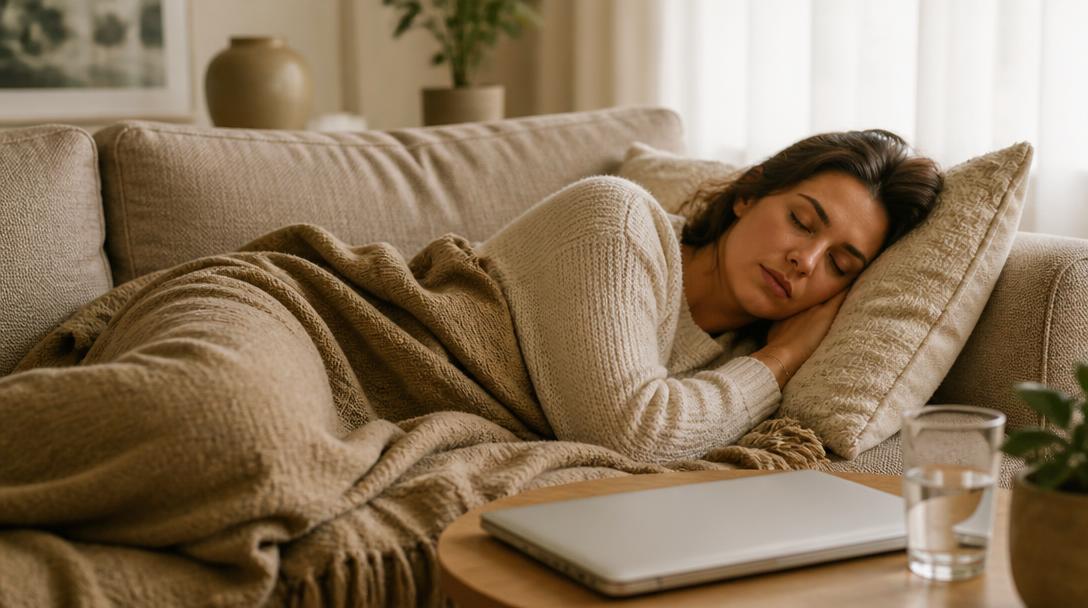
How Long Should a Nap Be? A Remote Worker’s Guide
For years I worked rotating shifts, and naps weren’t a luxury. They were how I got through the week. I also learned, the hard way, that a bad nap can leave you feeling worse than no nap at all. I’d lie down “for a few minutes,” wake up ninety minutes later with a pounding head, and spend the rest of the afternoon in a fog.
If you work from home, you’ve probably felt the same pull. The bed is twenty steps away, nobody is watching, and that 2 p.m. slump hits hard. So how long should a nap be? For most adults, the short answer is 10 to 20 minutes, taken in the early afternoon. But there’s a bit more to it than that, especially when your office is also your bedroom. Here’s what the research says, and how to make a midday nap work for you instead of against you.
The Short Answer: How Long Should a Nap Be?
For a quick reset during a workday, aim for a nap of about 10 to 20 minutes. Mayo Clinic’s guidance for healthy adults puts the sweet spot at 20 to 30 minutes and advises against regularly napping longer than that, because longer naps make grogginess more likely (Mayo Clinic). The Sleep Foundation lands in the same place: 10- to 30-minute power naps are refreshing, and naps under 20 minutes tend to improve alertness right away with little or no grogginess (Sleep Foundation).
If you have a meeting soon after you wake, go shorter. If you have a free afternoon and are seriously short on sleep, a full 90-minute nap is the other option. Anything in the awkward middle, roughly 30 to 60 minutes, is where most people get into trouble.
Why Nap Length Matters So Much
It comes down to sleep stages. When you fall asleep, you drift through lighter stages first. Give it long enough and you slide into deep sleep, the slow-wave stage your body uses for physical recovery. (I wrote a whole guide on what deep sleep is and why it matters if you want the details.)
Deep sleep is great at night. In the middle of a workday, it’s a problem. If your alarm yanks you out of deep sleep, you wake up with what researchers call sleep inertia: that heavy, confused, “where am I?” feeling. Mayo Clinic notes this grogginess often fades within about 35 minutes, but that’s 35 minutes of fumbling through emails and saying “sorry, can you repeat that?” on a video call.
Keep your nap short and you wake up from light sleep, before deep sleep kicks in. Go long enough to finish a full sleep cycle, roughly 90 minutes, and you tend to come back up through lighter sleep again. The danger zone is waking up partway through.
Nap Lengths Compared: 10, 20, 30, 60 and 90 Minutes
One of the most useful studies on this comes from researchers at Flinders University in Australia, published in the journal Sleep in 2006. They had people who’d been short on sleep the night before try afternoon naps of 5, 10, 20 and 30 minutes, then tracked how alert they felt and how well they performed (Brooks & Lack, Sleep, 2006). Here’s what they found, plus what the broader guidance says about longer naps.
| Nap length | What to expect | Best for |
|---|---|---|
| 5 minutes | Few benefits compared with no nap in the 2006 study | Not much; a short walk may do more |
| 10 minutes | Immediate boost; some benefits lasted up to about 2.5 hours | Workdays, meetings soon after |
| 20 minutes | Benefits showed up about 35 minutes after waking | A classic power nap with a buffer |
| 30 minutes | Grogginess first, then improvements | When you have time to wake up slowly |
| 45–60 minutes | Higher odds of waking from deep sleep | Usually best avoided on workdays |
| About 90 minutes | Roughly one full sleep cycle; brief sluggishness | Serious sleep debt, days off |
The headline from that study surprised me: the 10-minute nap came out on top overall. It gave people an immediate lift, while the 20-minute nap took a little while to pay off and the 30-minute nap made people temporarily worse before it made them better. Keep in mind that’s one study with a small group of healthy young adults, so treat it as a strong hint, not a law. Your own sweet spot might be 10 minutes or it might be 20. But it’s a good argument against the “I’ll just lie down for an hour” plan.
What about the 90-minute nap?
A longer nap timed to end around the close of a roughly 90-minute sleep cycle should only leave you briefly sluggish, according to the Sleep Foundation. That’s why it can work after a terrible night or on a day off. The catch is that a nap that long eats into the “sleep pressure” you need to fall asleep at night. If you do it regularly, you may find yourself wide awake at 11 p.m., which sets up a worse night and an even bigger nap tomorrow. I’ve been in that loop. It’s not fun.
When to Nap if You Work From Home
Timing matters almost as much as length. Most of us get a natural dip in alertness in the early afternoon, a few hours after lunch. That’s the window to use.
- Aim for early afternoon. Mayo Clinic suggests napping before 3 p.m., because later naps can make it harder to sleep well at night.
- Think about when you woke up. If you get up at 6 a.m., your dip probably arrives around 1 or 2 p.m. If you’re a late riser, it shifts later, but try not to push it into the evening.
- Check your calendar first. Don’t nap 10 minutes before a call. Give yourself at least 15 minutes after you wake to shake off any fog before anything that needs a sharp brain.
- Use a natural break. Right after lunch, between focused work blocks, or just after your last meeting of the early afternoon tend to work well.
One more thing for remote workers: be honest with yourself about whether you need a nap or a break. Sometimes the slump is boredom, dehydration, or three straight hours staring at a screen. A walk outside in daylight can do a lot of the same job, and it won’t touch your night’s sleep.
How to Take a Better Nap at Home
Working from home gives you a real advantage here. You don’t have to curl up in your car or sneak off to a break room. But the home setup has its own traps, mostly the temptation to crawl under the covers and lose the whole afternoon.

1. Set an alarm, every time
This is the one rule I’d never break. Set it for your planned nap length plus about five minutes to fall asleep. The Sleep Foundation suggests setting aside 15 to 30 minutes in total. Put the phone across the room if you’re a snooze-button person.
2. Consider the couch instead of the bed
This is personal, but it works for a lot of people. Napping on the couch or in a recliner, on top of a blanket instead of under it, sends your brain a “this is a short rest” signal. Climbing into bed in pajamas tells it you’re settling in for the night.
3. Make it dark, quiet and cool
Mayo Clinic recommends a quiet, dark room at a comfortable temperature, with screens put away. A sleep mask and earplugs or a white-noise app go a long way if your home office faces a busy street or you share the space with family.
4. Don’t stress if you don’t fully fall asleep
Lying still with your eyes closed for 15 minutes still counts as rest. Some people can’t fully drop off during the day, and that’s fine. Don’t stay there for an hour trying to force it.
5. Have a wake-up routine
The Sleep Foundation suggests getting bright light or sunshine and splashing water on your face to shake off post-nap grogginess. Open the blinds, drink a glass of water, stretch, then sit back down.
6. Know your caffeine cutoff
Some people swear by the “coffee nap”: drinking a coffee right before a short nap so the caffeine kicks in around the time they wake up. The Sleep Foundation mentions it, though it doesn’t offer firm timing guidance. If you try it, keep it to the early afternoon. The same article recommends avoiding caffeine within about eight hours of bedtime, and caffeine affects people differently, so pay attention to how you sleep that night.
Is Napping Good for You?
For most healthy adults, a short nap is a perfectly reasonable tool. Mayo Clinic lists relaxation, less fatigue, more alertness, a better mood and improved performance, including quicker reaction time and better memory. The Sleep Foundation also points to improved performance and safety for shift workers, which I can vouch for from my own years on rotating schedules.
But napping has limits:
- Long naps can backfire. Mayo Clinic notes that some research has linked naps longer than an hour a day with higher risks of high blood pressure, diabetes and heart disease. That’s an association, not proof that naps cause those problems; people who need long naps may already be unwell or sleeping poorly. Still, it’s a reason to keep naps short.
- Naps can make insomnia worse. If you already struggle to fall or stay asleep at night, long or frequent daytime naps can deepen the problem. In that case, it may be better to skip naps for a while and focus on your nights. My guide to natural insomnia remedies is a good place to start.
- A nap can’t replace a night’s sleep. It’s a patch, not a fix. If you’re napping every day because you’re running on five hours, the real job is getting more sleep at night. (I learned that lesson the brutal way, and wrote about it in Is 3 Hours of Sleep Better Than None?)
When Needing a Nap Is a Warning Sign
An occasional afternoon nap is normal. Needing one every single day, or still feeling exhausted after a full night in bed, is different. Mayo Clinic advises talking to a healthcare professional if you’re napping more than usual, especially if you still feel sleepy after waking up in the morning. That kind of sleepiness can come from a medication, a sleep disorder or another health condition.
Signs it’s worth booking a doctor’s appointment or asking about a sleep clinic referral:
- You fall asleep without meaning to during the day, like in meetings or while reading
- You feel unrefreshed no matter how much you sleep
- Someone has told you that you snore loudly, gasp or stop breathing at night (possible signs of sleep apnea)
- You’ve ever nodded off while driving
- Your daytime sleepiness started after a new medication
Don’t just nap your way around those. They deserve a proper look from a professional.
My Simple Nap Plan for Remote Workers
If you want a starting point, here’s what I’d suggest:

- Length: 10 to 20 minutes of sleep, with an alarm set for about 25 minutes so you have time to drift off.
- Time: Early afternoon, and before 3 p.m.
- Place: Couch or recliner, dark and quiet, phone face down.
- After: Light, water, a quick stretch, and 10 to 15 minutes before anything important.
- Check-in: If you’re needing a nap every day, look at your nights first.
Try it for a week and pay attention to two things: how you feel 30 minutes after you wake, and how you sleep that night. Adjust from there. And if you want help getting your nights in better shape so you need naps less, grab my free sleep checklist. It covers the basics I wish someone had handed me back when I was working nights.
Frequently Asked Questions
Is a 2-hour nap too long?
For most adults, yes. A 2-hour nap will likely take you through more than one sleep cycle, can leave you groggy, and makes it harder to fall asleep at night. If you regularly feel you need naps that long, talk to your doctor about why you’re so tired.
Is a 20-minute nap better than 30 minutes?
Usually. Both are within the range Mayo Clinic and the Sleep Foundation recommend, but naps of 30 minutes or more are more likely to cause grogginess when you wake. If you nap during the workday, 10 to 20 minutes is the safer bet.
Why do I feel worse after a nap?
That’s sleep inertia. It happens when you wake up from deeper sleep, which is more likely with longer naps. Keep naps shorter, get bright light and a glass of water after you wake, and give yourself time before demanding tasks.
What’s the latest time I should nap?
Mayo Clinic recommends napping before 3 p.m. Later naps can make it harder to fall asleep at your usual bedtime.
Does lying down without sleeping count?
It still helps. Resting quietly with your eyes closed can ease fatigue even if you don’t fully fall asleep. Just keep it to the same 20 to 30 minute window.