

Best Pillows for Side Sleepers: What to Look For
For most of my shift-work years, I blamed the schedule for every bad night. Some of that blame was fair. But a good chunk of the stiff necks, the numb arms and the 4 a.m. pillow-punching came down to something much simpler: I was a side sleeper using a flat, tired pillow that was never built for the way I actually slept.
If you sleep on your side, your pillow has a harder job than anyone else’s. It has to fill the gap between your mattress and your head, which is roughly the width of your shoulder, and hold it there all night. Get that wrong and your neck spends seven hours bent sideways. So instead of handing you a list of “best pillows” with no explanation, this guide walks through what actually matters for side sleepers, then gives a handful of picks based on specs and owner reviews.
Affiliate disclosure: some links in this post are Amazon affiliate links. If you buy through them, Deep Sleep Mastery may earn a small commission at no extra cost to you. I haven’t personally tested every pillow below; the picks are based on published specs, materials and the overall pattern of owner reviews.
Why Side Sleepers Need a Different Pillow
When you lie on your back, your head only sinks a few inches before it meets the mattress. On your side, there’s a much bigger gap: from the top of your shoulder to the side of your head. If your pillow is too thin, your head tips down toward the mattress. If it’s too thick, your head gets pushed up toward the ceiling. Either way, your neck isn’t in line with the rest of your spine.
The goal is simple to describe: when you’re lying on your side, your nose should line up roughly with the middle of your chest, and your neck should look like a straight continuation of your back. Spine-Health’s physical therapy guidance on choosing a pillow for neck pain makes the same point: side sleepers generally need a higher pillow so the head and neck stay aligned.
Side sleeping itself is a perfectly good position. It’s often recommended for snorers and people with reflux, and it’s the position most adults naturally drift into. (If you’re curious which side is better, I dug into that in what side is better to sleep on for digestion.) It just needs the right support.
What to Look For in a Side Sleeper Pillow

There are four things I’d check before buying anything: loft, firmness, fill material and whether you can adjust it. Price and brand matter a lot less than people think.
1. Loft (Height) That Matches Your Shoulders
Loft is the pillow’s height when it’s lying flat, and it’s the single most important spec for side sleepers. The Sleep Foundation’s side sleeper pillow guide suggests medium to high loft, generally at least 4 inches, with broad-shouldered sleepers often needing more than 6 inches.
A few things change the number that’s right for you:
- Shoulder width. Wider shoulders mean a bigger gap to fill, so a higher loft.
- Mattress feel. On a soft mattress your shoulder sinks in, which shrinks the gap, so you may need a slightly lower pillow. On a firm mattress, go a little higher.
- Compression. A pillow that measures 6 inches in the shop might squash to 3 inches under your head. Look at how much a fill compresses, not just the advertised height.
A quick at-home test: lie on your side on your own mattress and have someone look at you from behind (or take a photo with a timer). If your head tilts down, you need more loft. If it tilts up, you need less.
2. Medium to Medium-Firm Support
Firmness and loft go hand in hand. A soft pillow can look tall and then collapse the moment your head lands on it. Most side sleepers do best with a medium to medium-firm feel: enough give to cushion your ear and jaw, but enough push-back to keep your head from sinking through. If you wake up with your ear sore or your arm jammed under the pillow to prop it up, the pillow is probably too soft.
3. The Right Fill Material
Fill decides how the pillow feels, how it holds its shape, and how hot it sleeps. Here’s how the common options compare for side sleeping:
| Fill | Feel | Good for side sleepers? | Watch out for |
|---|---|---|---|
| Shredded memory foam | Medium, moldable | Yes, and usually adjustable | Can clump; needs fluffing |
| Solid memory foam | Medium-firm, contouring | Yes, if the loft is high enough | Can sleep warm; fixed height |
| Latex | Bouncy, supportive | Yes, holds loft well | Pricier; some have latex allergies |
| Buckwheat hulls | Firm, moldable | Yes, very stable | Heavy and a little noisy |
| Down / down alternative | Soft, squishy | Only if very full or high-fill | Flattens through the night |
| Polyester fibre | Soft | Usually not | Loses loft fast |
4. Adjustability
This is the feature I’d pay a little extra for. Because the “right” loft depends on your shoulders, your mattress and even how many nights you’ve spent on the pillow, a pillow with removable fill lets you dial it in instead of guessing. Shredded foam and buckwheat pillows usually come with a zip so you can take fill out (or add it back) until your neck sits straight.
Other Things Worth Checking
- Shape. Some side-sleeper pillows are curved or have a cut-out for your shoulder, which can stop you from shoving the pillow around at night. Contoured “cervical” pillows have a raised edge to support the neck.
- Cover. A removable, washable cover makes life easier. Breathable covers help if you run hot.
- Smell. New foam pillows often have an off-gassing smell for a few days. Airing them out usually helps.
- Return policy or trial. Pillows are personal. A decent return window takes a lot of the risk out of buying one online.
Top Picks for Side Sleepers (Based on Specs and Reviews)
These aren’t lab results, and I haven’t slept on every one. They’re well-known pillows whose design lines up with what side sleepers need: enough loft, medium-firm support, and in most cases a way to adjust the height. Check current prices, sizes and return terms on the listing before you buy.
| Pick | Fill | Adjustable? | Best for |
|---|---|---|---|
| Coop Home Goods Original | Shredded foam + microfiber | Yes | Most side sleepers |
| Xtreme Comforts | Shredded memory foam | Yes | Budget buyers |
| Hullo Buckwheat | Buckwheat hulls | Yes | Hot sleepers who like firm |
| Elviros Cervical | Contoured memory foam | Flip for 2 heights | Neck stiffness |
Best Adjustable Overall: Coop Home Goods Original Adjustable Pillow
The Coop Original is one of the most widely recommended adjustable pillows, and the Sleep Foundation lists Coop’s crescent version among its side-sleeper picks for pressure relief. It’s filled with a blend of cross-cut memory foam and microfiber, and it arrives overstuffed on purpose. You unzip it and remove fill until the height suits your shoulders, then keep the extra in case the pillow flattens over time. That makes it a strong first choice if you don’t know your ideal loft yet.
Worth knowing: owners commonly mention a new-foam smell at first and that it takes a night or two of adjusting to get the height right. Check the Coop Home Goods Original Adjustable Pillow on Amazon
Best Budget Shredded Foam: Xtreme Comforts Shredded Memory Foam Pillow
If you want the adjustable shredded-foam idea for less money, Xtreme Comforts is a popular option. It uses shredded memory foam with a removable, breathable cover, and like the Coop you can take fill out to lower the loft. The trade-off is that cheaper shredded fill can clump and may need regular fluffing to stay even. Check the Xtreme Comforts Shredded Memory Foam Pillow on Amazon
Best Firm and Cool: Hullo Buckwheat Pillow
Buckwheat is the opposite of fluffy. The hulls lock together and hold whatever shape you push them into, so your head stays exactly where you put it, and air moves through the fill easily, which helps if you sleep hot. You adjust the loft by adding or removing hulls. It’s firm, heavy and makes a quiet rustling sound when you move, so it’s not for everyone, but side sleepers who hate waking up on a pancake-flat pillow often love it. Check the Hullo Buckwheat Pillow on Amazon
Best Contoured Option: Elviros Cervical Memory Foam Pillow
Contour pillows have a wave shape with a raised roll under the neck and a dip for the head. Elviros makes one of the better-known versions, with two edges of different heights so you can flip it to find the one that fits you. Contour pillows can feel odd for the first few nights, and they work best if you mostly stay on your side or back rather than tossing around. If you wake with a stiff neck, this style is worth a look, along with a chat with your doctor or a physiotherapist if the pain hangs around. Check the Elviros Cervical Memory Foam Pillow on Amazon
Don’t Forget a Knee Pillow
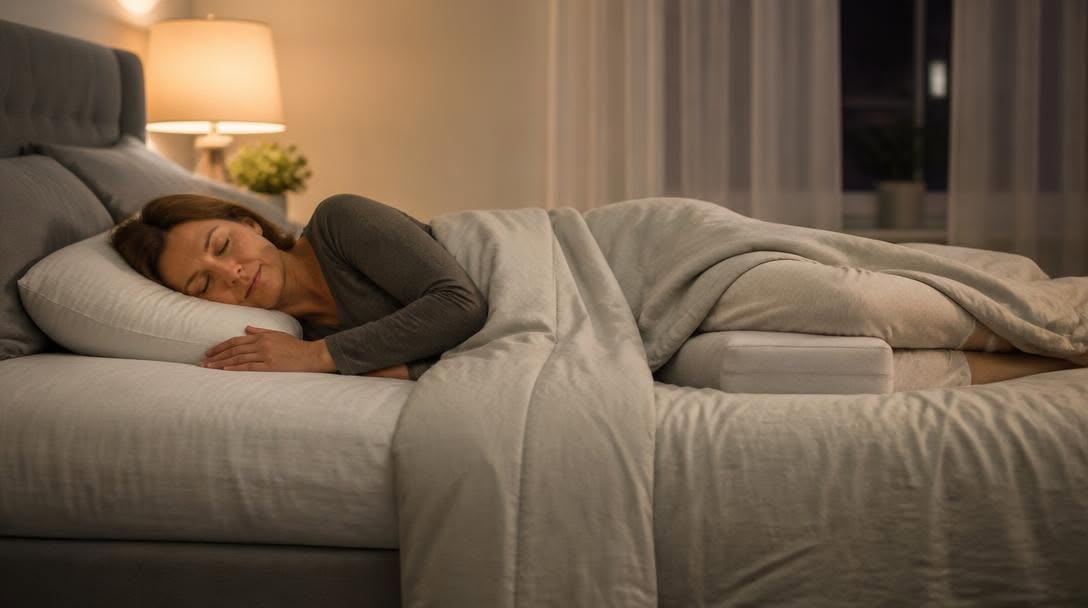
Your head pillow fixes the top half of your spine. The bottom half matters too. When you sleep on your side with nothing between your legs, your top knee drops forward and twists your hips and lower back. The Sleep Foundation notes that side sleepers may get better posture from an extra pillow between their knees. You don’t need anything fancy: a firm, flat spare pillow works. If you want a dedicated one, contoured foam knee pillows are cheap and easy to find. Browse knee pillows for side sleepers on Amazon
Signs Your Current Pillow Isn’t Working
You might not need a new pillow at all. Here’s how I’d tell:
- You wake up with a stiff neck or tight shoulders that loosen up after an hour or two.
- You fold the pillow in half or stack two pillows to get comfortable.
- You sleep with an arm shoved under the pillow to prop your head up.
- Your arm or hand goes numb or tingly overnight on the side you sleep on.
- The pillow stays folded when you bend it in half, or it’s lumpy and flat.
Pillows don’t last forever. The Sleep Foundation says pillows lose loft over time and typically need replacing every few years, sooner for cheap polyester fill. If yours is lumpy, flat or yellowed, it’s done.
One honest caveat: a pillow can help with neck comfort, but it’s not a treatment. If you have neck pain that’s severe, getting worse, or comes with numbness, tingling or weakness down your arm, see your doctor rather than shopping your way out of it. The same goes for loud snoring with gasping or choking at night. That can point to sleep apnea, which needs a proper diagnosis, not a new pillow.
How to Break In a New Pillow
A new pillow almost always feels wrong for a night or two, especially if you’re switching from an old, flat one. A few things that help:
- Give it a week. Your neck has gotten used to your old setup. Unless the new pillow is clearly causing pain, give it several nights before deciding.
- Adjust in small steps. With an adjustable pillow, take out a handful of fill at a time. It’s easy to overshoot and end up too low.
- Air it out. Unbox foam pillows a day or two before use to let any smell fade.
- Fluff shredded fill daily. A quick shake and squeeze keeps the fill from bunching up at one end.
- Check your mattress too. A sagging mattress changes how far your shoulder sinks, which changes the loft you need.
If you want to fix the rest of your sleep setup while you’re at it, grab my Free Sleep Checklist. It covers the bedroom basics I wish I’d sorted out years earlier.
Frequently Asked Questions
What loft pillow is best for side sleepers?
Most side sleepers do best with a medium to high loft, typically 4 inches or more, and broad-shouldered sleepers may need 6 inches or more. The right height is the one that keeps your neck level with your spine on your own mattress, so an adjustable pillow is a safe bet if you’re unsure.
Are memory foam pillows good for side sleepers?
Yes, as long as the loft is high enough. Solid memory foam gives steady, contouring support, and shredded memory foam adds the bonus of adjustability. If you sleep hot, look for a breathable cover or consider buckwheat or latex instead.
Should side sleepers use a firm or soft pillow?
Medium to medium-firm usually works best. Too soft and your head sinks out of line. Too firm and it can push your head up and put pressure on your ear and jaw.
Do side sleepers need a pillow between their knees?
It isn’t required, but many side sleepers find it helps. A pillow between the knees keeps your top leg from dropping forward, which keeps your hips and lower back in a more neutral position.
How often should I replace my pillow?
Every few years is typical, but go by condition rather than the calendar. If it’s flat, lumpy, stays folded when you bend it, or you keep waking up stiff, it’s time.
The Bottom Line
For side sleepers, the best pillow is the one that fills the gap between your shoulder and your head and keeps your neck straight all night. Start with loft, then firmness, then fill. If you don’t know your ideal height, an adjustable pillow like the Coop Original or a buckwheat pillow takes the guesswork out of it, and a cheap knee pillow finishes the job for your hips and lower back. It’s one of the easier sleep fixes out there, and your neck will tell you within a week whether you got it right.