
What Is REM Sleep? Why Your Dreaming Stage Matters
For years I worked rotating shifts, and one of the strangest side effects was my dreams. After a run of short, broken sleeps I’d finally get a proper night in bed and wake up feeling like I’d just watched three films back to back: vivid, weird, emotional dreams, one after another. I didn’t know it then, but I was watching my brain claw back the REM sleep I’d been cheating it out of.
So what is REM sleep, exactly? It’s the stage of sleep where most of your vivid dreaming happens, your eyes dart around behind closed lids, and your body goes temporarily limp while your brain runs at close to waking speed. It’s not a luxury stage you can skip. It plays a real part in memory, mood and how sharp you feel the next day, and most of it happens in the last few hours of the night, which is exactly the part most of us cut short.
Here’s what REM sleep is, what it does, how much of it you need, and the practical things that protect it (and wreck it).
What Is REM Sleep?
REM stands for rapid eye movement. It’s one of the two main types of sleep. The other is non-REM sleep, which includes the light stages and the deep, slow-wave sleep I covered in my guide to deep sleep.
According to the National Institute of Neurological Disorders and Stroke (NINDS), during REM sleep:
- Your eyes move rapidly from side to side behind your closed eyelids.
- Your brain-wave activity looks closer to being awake than to being asleep.
- Your breathing gets faster and more irregular.
- Your heart rate and blood pressure rise to near waking levels.
- Your arm and leg muscles become temporarily paralyzed, so you don’t act out your dreams.
That combination is why REM is sometimes called “paradoxical sleep.” Your brain is busy, but your body is switched off. The muscle shutdown (called atonia) spares your eyes and your diaphragm, so you keep breathing and your eyes keep moving while almost everything else stays still.
Most dreaming happens during REM. You can dream in non-REM sleep too, but REM dreams tend to be the vivid, story-like, emotionally charged ones you remember if you wake up in the middle of them.
Where REM Fits in Your Sleep Cycle
You don’t drop straight into REM when you fall asleep (healthy adults don’t, anyway). You move through the stages of non-REM sleep first, and then cycle back and forth through the night. The Sleep Foundation puts a full sleep cycle at roughly 90 to 120 minutes, and you go through several of them in a typical night.
| Stage | Type | What’s going on |
|---|---|---|
| N1 | Light non-REM | Drifting off; easy to wake, a few minutes long |
| N2 | Light non-REM | Heart rate and temperature drop; most of your night is spent here |
| N3 | Deep non-REM | Slow-wave sleep; physical repair; heaviest early in the night |
| REM | REM | Vivid dreams, active brain, limp body; heaviest late in the night |
Your first REM period usually shows up about 60 to 90 minutes after you fall asleep, and it’s short. A review of sleep physiology in the NIH’s StatPearls reference (Physiology, Sleep Stages) describes that first REM stretch as lasting around 10 minutes, with the final one of the night running up to an hour.
That detail is the single most useful thing to know about REM: it’s back-loaded. Deep sleep dominates the first half of the night. REM dominates the second half. Which brings me to the alarm clock.
Why Cutting Your Night Short Hits REM Hardest

Because your longest REM periods come in the last cycles of the night, the hours you lose by getting up early, or going to bed late and getting up at the same time, are disproportionately REM hours. Sleep six hours instead of eight and you don’t lose a neat quarter of every stage. You lose a big chunk of your longest, richest REM periods.
When I was rotating onto early shifts, that was me. I’d get a decent chunk of deep sleep in the first few hours, then the alarm would rip me out right as my brain was settling into the long dreaming stretches. Then on days off I’d sleep in and get those wild, cinematic dreams. That’s what’s known as REM rebound: when you’ve been short on REM, the brain tends to make up some of it the next time it gets the chance. The Sleep Foundation describes the same effect. It’s a sign of debt being repaid, not a sign you’re sleeping “extra well.”
If you’ve ever wondered why a few hours of sleep feels so much worse than a full night, this is a big part of it. Short sleep isn’t just less sleep. It’s a lopsided sleep that’s especially light on REM.
What REM Sleep Actually Does for You
Researchers are still working out exactly what REM is for, and I’m not going to pretend there’s a tidy answer. But a few roles are well supported.
Memory and learning
Sleep helps lock in what you learned during the day, and NINDS notes that memory consolidation most likely needs both non-REM and REM sleep. The Sleep Foundation describes REM as a time when the brain reviews recent learning and sorts out what to keep, and some studies suggest it may sharpen working memory. It also notes that REM may increase after you’ve been learning something new.
Emotional processing
This is the one I noticed most. On weeks when my sleep was a mess, I was short-tempered, flat and oddly fragile. REM sleep is linked to emotional regulation, and the Sleep Foundation points out that disrupted REM is associated with worse mood, depression and PTSD. That doesn’t mean low REM causes those conditions, but it’s part of why running on short sleep makes small problems feel huge.
Brain development
Babies spend a huge share of their sleep in REM, which is one reason researchers think it matters for the developing brain. That share drops as we grow up and keeps easing down as we age. NINDS notes that older adults spend less time in REM.
How Much REM Sleep Do You Need?
There isn’t a hard target you need to hit every night, and I’d be wary of anyone who gives you one to the minute. As a ballpark:
- The Sleep Foundation says most adults need about two hours of REM sleep a night.
- StatPearls puts REM at roughly 25% of total sleep.
- Both of those assume you’re getting a full night, which for adults means at least seven hours, and ideally seven to nine.
Do the maths and it lines up: a quarter of eight hours is two hours. A quarter of six hours is ninety minutes, and because REM is back-loaded, a short night often comes in under that.
The practical takeaway is simple. You don’t need to chase REM directly. Give yourself enough total sleep, at consistent times, and REM mostly takes care of itself.
A word on sleep trackers
Rings and watches will happily tell you how many minutes of REM you got. Treat those numbers as rough estimates. Consumer trackers guess sleep stages from movement and heart rate, while the gold-standard way to measure REM is a lab sleep study that records brain waves, eye movements and muscle tone. Trends over weeks are more useful than any single night’s number, and don’t lose sleep worrying about a “low REM” score.
REM Sleep vs Deep Sleep
People often treat these as rivals. They’re teammates. Here’s the short version:
- Deep sleep (N3) is your body’s maintenance window. The brain is slow and quiet, it’s hard to wake you, and it’s concentrated in the first half of the night.
- REM sleep is the brain’s active window. Dreams are vivid, the body is still, and it’s concentrated in the second half of the night.
You need both. A night that’s long on one and short on the other still leaves you feeling off. If you want the deep-sleep side of the story, I’ve gone into it in detail in What Is Deep Sleep?
What Cuts Into Your REM Sleep
Here are the usual culprits. Some are obvious; a couple surprised me.
Not enough sleep, or sleep at the wrong times
This is the big one, for the reasons above. Short nights, early alarms, and irregular schedules (hello, shift work) all eat into the late-night REM periods first.
Alcohol
A nightcap might make you drowsy, but alcohol is associated with less REM sleep (StatPearls lists it alongside sedatives as REM suppressants). The Sleep Foundation also flags nighttime alcohol and cannabis as REM disruptors. In my experience, nights after a few drinks are the ones where I wake up at 3 a.m. and can’t settle.
Certain medications
Some medications, including certain sleep aids and antidepressants, can change how much REM you get. That doesn’t mean you should stop anything. If you’re worried a medication is affecting your sleep, talk to your doctor or pharmacist before you change a thing.
Untreated sleep disorders
The Sleep Foundation notes that conditions like insomnia and sleep apnea can keep you from getting enough REM. If you snore loudly, wake up gasping, or feel exhausted no matter how long you sleep, read my guide to what sleep apnea is and get checked.
Stress and late-night screens
The Sleep Foundation lists stress and bright artificial light at night as things that can disrupt REM. Both also push your bedtime later, which brings us back to the first problem.
How to Get More REM Sleep
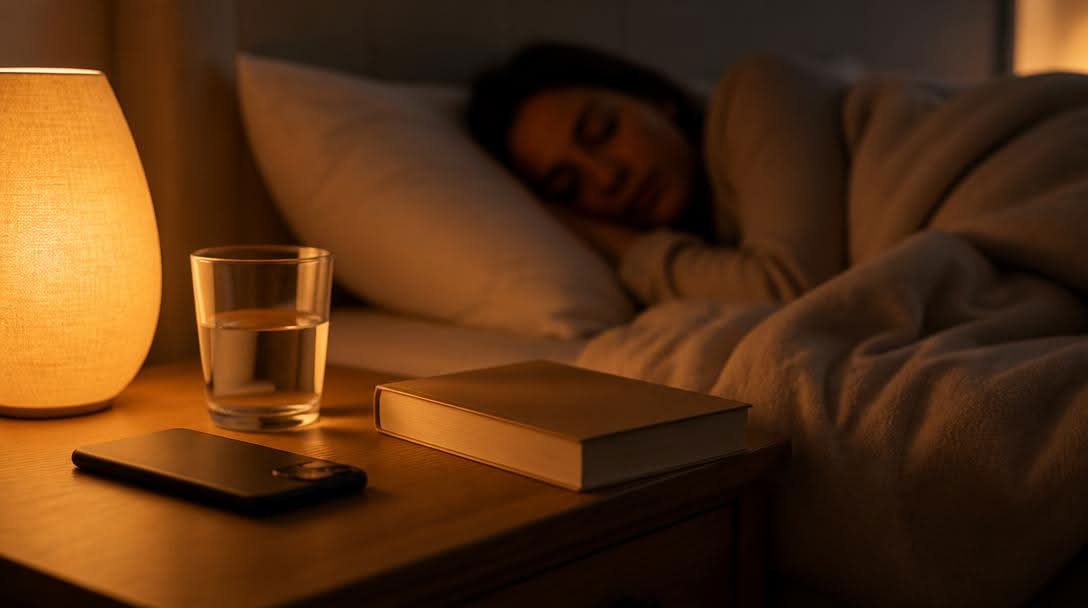
There’s no secret hack here. The things that protect REM are the same basics that protect sleep in general, with a bit of extra weight on the end of the night.
- Protect the back end of your night. If you need to be up at 6:30, aim to be asleep by 11 at the latest. The last 90 minutes are prime REM time, so that’s the worst place to cut.
- Keep the same wake time, even on weekends. A consistent schedule keeps your sleep cycles predictable. Big weekend lie-ins followed by early Mondays are a mini version of shift work.
- Go easy on alcohol, especially late. If you drink, earlier and less is better for your sleep than a big drink right before bed.
- Dim the lights in the evening. Turn down overhead lights and put the phone away for the last stretch before bed.
- Give stress somewhere to go before bed. A short wind-down routine, jotting tomorrow’s to-do list on paper, or a few minutes of slow breathing all help.
- Keep your bedroom cool, dark and quiet. The fewer things there are to wake you in those last cycles, the more REM you keep.
- Don’t ignore a real sleep problem. If you’ve had trouble sleeping for weeks, the most effective fix for chronic insomnia is CBT-I (cognitive behavioural therapy for insomnia), not another gadget. A doctor can point you to it.
If you want all of this on a single page you can stick on the fridge, grab my Free Sleep Checklist. It’s the routine I wish I’d had back in my shift-work days.
When REM Sleep Goes Wrong: Signs to See a Doctor
Most people never need to think about REM beyond “get enough sleep.” But a few sleep disorders are tied directly to it, and they’re worth knowing about:
- Acting out your dreams. Shouting, punching or kicking during vivid dreams can be a sign of REM sleep behaviour disorder, where the normal muscle paralysis of REM doesn’t kick in. StatPearls notes it has links to neurological conditions such as Parkinson’s disease, so it’s worth getting looked at, especially if you or your bed partner have been hurt.
- Falling asleep suddenly during the day, or sudden muscle weakness when you laugh or get emotional. These can be signs of narcolepsy, where people can slip straight into REM.
- Frequent sleep paralysis: waking up unable to move for a few seconds, sometimes with frightening sensations. An occasional episode is common, especially when you’re short on sleep, but frequent ones are worth mentioning to a doctor.
- Constant nightmares that wreck your sleep or your days.
- Loud snoring, gasping, or pauses in breathing, which point toward sleep apnea.
If any of these sound familiar, talk to your doctor or ask about a referral to a sleep clinic. A sleep study is the only way to actually see what’s happening in your REM sleep. For a broader overview, see my rundown of 7 common sleep disorders.
Frequently Asked Questions
What is REM sleep in simple terms?
It’s the dreaming stage of sleep. Your eyes move rapidly behind closed lids, your brain is almost as active as when you’re awake, and your body’s muscles are temporarily paralyzed so you don’t act out your dreams.
How much REM sleep is normal?
Most adults get about two hours a night, or roughly a quarter of their total sleep, when they’re getting a full seven to nine hours. Your exact amount varies night to night and tends to drop a little with age.
When does REM sleep happen?
Your first REM period usually starts about 60 to 90 minutes after you fall asleep and is short. Each REM period gets longer through the night, so most REM happens in the last few hours before you wake up.
Is REM or deep sleep more important?
Neither. Deep sleep does more of the physical restoration and REM does more of the brain and emotional work, and both contribute to memory. You need a full night to get enough of each.
Why do I have such vivid dreams after a bad week of sleep?
That’s likely REM rebound. When you’ve been short on REM, your brain tends to make up for it the next time you get a full night, so you spend more time in REM and remember more intense dreams.
Does alcohol affect REM sleep?
Yes. Alcohol is associated with less REM sleep and more broken sleep later in the night, even if it helps you nod off faster.
The Bottom Line
REM sleep is the active, dreaming part of your night, and it does real work for your memory, your mood and how switched-on you feel the next day. The catch is that it’s packed into the last few hours of sleep, which are exactly the hours we shave off with late nights, early alarms and irregular schedules.
I learned that the hard way on rotating shifts. You don’t need a tracker or a supplement to fix it. Give yourself a full night, keep your wake time steady, go easy on the late drinks, and if something feels genuinely wrong with your sleep, get it checked by a doctor. Your REM sleep will take care of the rest.