
How to Stop Snoring: 11 Fixes That Actually Work
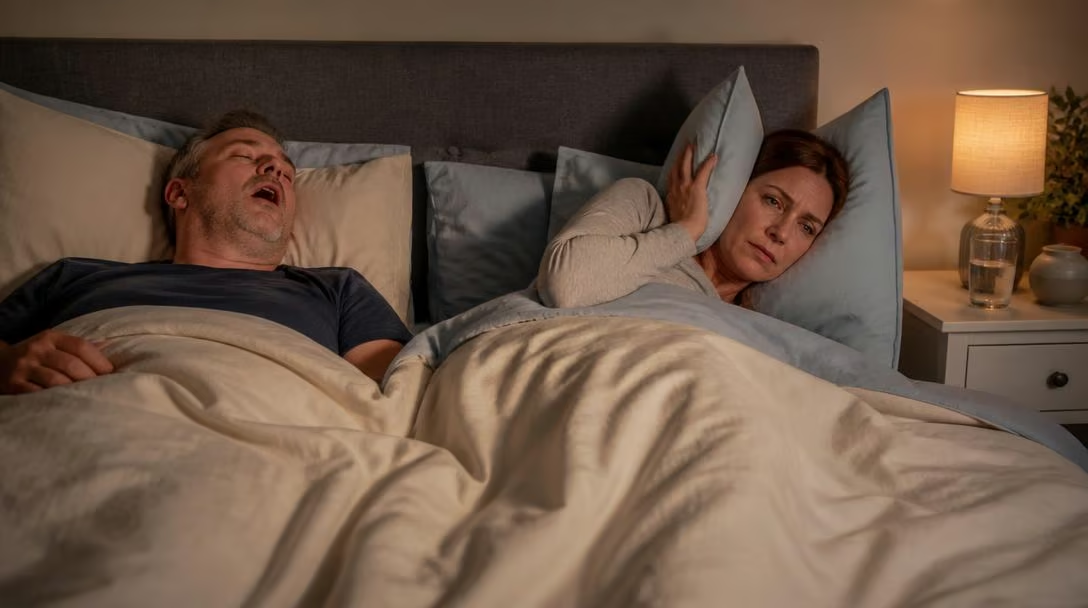
If you’re reading a guide on how to stop snoring, there’s a decent chance you’re not the one who asked for it. Someone elbowed you at 2 AM, or recorded you on their phone, or quietly moved to the couch. Snoring is one of those sleep problems that often bothers the person next to you more than it bothers you, at least until you start feeling the effects yourself.
After years of rotating shifts, I learned the hard way that “I slept through the night” and “I actually slept well” aren’t the same thing. Snoring sits right in that gap. Sometimes it’s harmless noise. Sometimes it’s your airway struggling, and your sleep quality takes the hit without you ever noticing. So this post covers both sides: 11 practical fixes, starting with the free ones, and the signs that mean you should skip the home remedies and talk to a doctor.
Quick note: this is general information, not medical advice. If your snoring comes with gasping, choking, breathing pauses or heavy daytime sleepiness, see your doctor or a sleep clinic before trying to fix it on your own.
Why You Snore in the First Place
Snoring is a vibration problem. When you fall asleep, the muscles in your throat, tongue and soft palate relax. Your airway narrows, and as air pushes through that tighter space, the soft tissue flutters and makes noise. The American Academy of Sleep Medicine puts it simply: snoring happens when “the flow of air makes the tissues in the back of your throat vibrate” (AASM Sleep Education).
It’s also very common. According to the AASM, about half of people snore at some point in their lives, and roughly 40% of adult men and 24% of adult women are habitual snorers. It tends to run in families and becomes more common with age.
The things that make that airway narrower or floppier are what turn a quiet sleeper into a loud one:
- Sleeping on your back. Gravity pulls your tongue and soft palate toward the back of your throat.
- Alcohol and sedatives. They relax throat muscles even more than normal sleep does.
- A blocked nose. Colds, allergies or a deviated septum push you toward mouth breathing.
- Extra weight, especially around the neck, which can add pressure on the airway.
- Anatomy, such as a smaller lower jaw, a receding chin or larger tonsils or soft tissue, as the Sleep Foundation explains.
- Smoking, which irritates and inflames the lining of the nose and throat.
- Being overtired. Mayo Clinic lists getting enough sleep as one of the first lifestyle changes for snoring, and anyone who’s come off a run of night shifts knows how hard you crash when you finally do sleep.
The right fix depends on the cause. Side sleeping won’t clear a blocked nose, and nasal strips won’t help if wine at dinner is the culprit.
First, Rule Out Sleep Apnea
This is the part most “stop snoring” lists bury at the bottom, and I think that’s a mistake. Plain snoring is a nuisance. Snoring caused by obstructive sleep apnea (OSA) is a health problem. With OSA, your airway doesn’t just narrow, it partly or fully collapses, and your breathing stops or gets shallow over and over through the night.
The AASM notes that not everyone who snores has a sleep disorder, but heavy snoring may be linked to sleep apnea, which is tied to higher risks of heart disease, stroke and diabetes. Watch for these warning signs:
- Your partner notices you stop breathing, then snort or gasp
- You wake up choking or short of breath
- You’re tired during the day even after a full night in bed
- Morning headaches or a very dry mouth on waking
- Loud snoring nearly every night
If that sounds familiar, the fixes below may quiet the noise without fixing the underlying problem. Mayo Clinic specifically notes that nasal strips and external nasal dilators are not effective for people with OSA. Talk to your doctor, who may refer you for an in-lab sleep study or a home sleep apnea test. I’ve written a full breakdown in What Is Sleep Apnea? if you want to know what’s actually going on and how it’s treated.
If none of those signs fit and you’re just a noisy sleeper, read on.
11 Ways to Stop Snoring
I’ve put these roughly in order of cost and effort: free habit changes first, then cheap gear, then the options that need a professional. Most people get the best results by stacking two or three of them.
1. Sleep on your side
If you only snore on your back, this one change might be all you need. Lying on your side keeps your tongue and soft palate from falling back into your airway. Mayo Clinic, the Sleep Foundation and the AASM all list it as a first-line fix.

The hard part is staying there. Most of us roll onto our backs without knowing it. A few tricks help:
- The tennis ball trick. Mayo Clinic suggests sewing a tennis ball into the back of a pajama top. Rolling onto it is uncomfortable enough that you shift back to your side.
- A body pillow behind your back, which makes rolling over less automatic.
- A pillow that fits side sleeping. If your current pillow leaves your neck kinked, you’ll keep drifting onto your back to get comfortable. My guide to the best pillows for side sleepers covers what loft and fill to look for.
2. Raise the head of your bed
Mayo Clinic recommends raising the head of your bed by about 4 inches. The Sleep Foundation suggests a wedge pillow or raising the bed frame, and specifically says that just stacking a higher pillow isn’t recommended. Piling up pillows bends your neck forward, which can make the airway narrower, not wider. Bed risers under the headboard legs or a foam wedge that lifts your whole upper body work better.
3. Cut the alcohol before bed
Alcohol relaxes your throat muscles, and that’s exactly what you don’t want at night. Mayo Clinic advises avoiding alcohol for at least two hours before bed, and the same goes for sedatives. If you drink, move it earlier in the evening. Plenty of people find their “mystery” snoring only shows up on nights they’ve had a few drinks. Don’t stop or change any prescribed sedative or sleep medication without talking to your doctor first.
4. Clear your nose
When your nose is blocked, you breathe through your mouth, and mouth breathing makes snoring more likely. Treating congestion is one of the lifestyle changes Mayo Clinic lists first.

What helps depends on why you’re stuffed up:
- Allergies: wash bedding in hot water regularly, keep pets out of the bedroom, and ask a pharmacist about allergy treatments.
- Chronic congestion: a steroid nasal spray may help. Some are over the counter and some need a prescription, so check with your doctor or pharmacist about which fits you.
- A structural problem like a deviated septum may need an ear, nose and throat (ENT) specialist.
- A warm shower or saline rinse before bed can loosen things up on a stuffy night.
5. Try nasal strips or a nasal dilator
Adhesive nasal strips sit across the bridge of your nose and gently pull your nostrils open. Internal nasal dilators do the same job from inside the nostril. Both are cheap, drug-free and easy to test for a week. They work best when your snoring starts in the nose. They won’t do much if the noise comes from your throat, and as noted above, they aren’t a treatment for sleep apnea.
6. Lose a little weight, if you’re carrying extra
I’m not going to pretend this one is quick or easy. But extra weight around the neck and throat can squeeze the airway, and both Mayo Clinic and the AASM list weight loss as a key snoring fix. The Sleep Foundation notes that even losing a small percentage of your body weight may help. If you started snoring around the time your weight went up, this is worth paying attention to.
7. Quit smoking
Smoking irritates the tissues in your nose and throat, which leads to swelling and congestion, both of which can make snoring worse. Quitting is on the AASM’s and Mayo Clinic’s lists of conservative fixes. Your doctor or pharmacist can help with quitting aids if you want support.
8. Get enough sleep (yes, really)
This one surprised me at first, but it makes sense. When you’re badly short on sleep, you tend to sleep more deeply when you finally get the chance, and your throat muscles relax even more. Mayo Clinic lists avoiding sleep deprivation as one of the lifestyle changes for snoring. Coming off a week of nights, I always slept like a rock, and “like a rock” isn’t always quiet. A regular sleep schedule helps your snoring as well as your energy. If falling asleep is your bigger problem, my list of natural insomnia remedies is a good place to start.
9. Do mouth and throat exercises
This is the fix most people haven’t heard of. Myofunctional therapy is a set of exercises for the tongue, soft palate and throat muscles, done daily, a bit like physical therapy for your airway. A 2018 systematic review and meta-analysis by Camacho and colleagues in the European Archives of Oto-Rhino-Laryngology concluded that these exercises reduced snoring in adults, measured both by questionnaires and by sleep studies. The Sleep Foundation also lists them as a way to reduce how loudly and how often you snore.
Exercises commonly used in these programs include pressing your tongue flat against the roof of your mouth and sliding it backward, holding the back of your tongue down against the floor of your mouth, and repeating vowel sounds out loud. They take a few minutes a day and you need to stick with them for weeks to see a difference. A speech-language pathologist or myofunctional therapist can give you a proper routine if you want to do this seriously.
10. Ask about an anti-snoring mouthpiece
Oral appliances are form-fitting mouthpieces that hold your lower jaw or tongue forward while you sleep, which keeps the airway more open. The Sleep Foundation describes two main types: mandibular advancement devices, which move the jaw forward, and tongue-retaining devices, which hold the tongue in place. Mayo Clinic notes that possible side effects include dry mouth and jaw pain.
You can buy boil-and-bite versions, but a dentist-fitted device is the safer route, especially if you have jaw problems, dental work or loose teeth. If there’s any chance you have sleep apnea, get that checked first, since an oral appliance for OSA should be prescribed and fitted as part of treatment.
11. Get medical treatment when home fixes aren’t enough
If you’ve tried the basics for a few weeks and you’re still loud, or if you have any of the sleep apnea warning signs above, it’s time for a doctor. Depending on what they find, options include:
- CPAP for sleep apnea. Mayo Clinic calls it “the most reliable and effective method of treating OSA.” The Sleep Foundation notes it’s not typically covered for snoring alone.
- Treatment for a structural issue, such as surgery for a deviated septum.
- Upper airway surgery for some people. Mayo Clinic notes that how well these surgeries work varies and the results can be hard to predict, and the Sleep Foundation treats surgery as a secondary option.
Your family doctor is the usual starting point. They can refer you to a sleep specialist or ENT if needed.
Which Fix Should You Try First?
Here’s a quick way to match the fix to the pattern you (or your partner) notice:
| If you snore… | Try first | Cost |
|---|---|---|
| Mostly on your back | Side sleeping, tennis ball trick, raised head of bed | Free to low |
| After drinks | No alcohol in the 2+ hours before bed | Free |
| With a stuffy nose | Treat congestion, nasal strips or dilators | Low |
| In every position | Mouth exercises, weight loss, ask a dentist about a mouthpiece | Free to moderate |
| With gasping or pauses | See a doctor about a sleep apnea test | Varies |
How to Tell If It’s Working
The tricky thing about snoring is that you can’t hear yourself do it. Give each change at least a week or two, and change one or two things at a time so you know what actually helped. A few ways to track it:
- Ask your partner. Low-tech, but they’re the expert here.
- Use a snore-recording app on your phone. It won’t diagnose anything, but it shows whether the loud stretches are getting shorter.
- Pay attention to how you feel in the morning. Better energy and fewer headaches are good signs. If you still wake up exhausted after a quieter week, don’t stop there. That’s a reason to see a doctor.
If you want a simple way to keep the rest of your sleep habits on track while you work on this, grab my Free Sleep Checklist. It covers the bedroom, evening routine and schedule basics that make every fix on this list work better.
Frequently Asked Questions
How can I stop snoring immediately?
For a quick fix tonight, sleep on your side, skip alcohol in the hours before bed, clear your nose with a warm shower or saline rinse, and try a nasal strip. These won’t fix every case, but they target the most common triggers. Long-term, side sleeping, weight loss and mouth exercises tend to make the bigger difference.
Is snoring always a sign of sleep apnea?
No. The AASM points out that not everyone who snores has a sleep disorder, and light snoring may not hurt your sleep quality at all. But loud, nightly snoring with gasping, choking, breathing pauses or daytime sleepiness should be checked by a doctor.
Why did I suddenly start snoring?
New snoring often has a simple trigger: a cold or allergy season, weight gain, more alcohol in the evening, a new medication, or simply getting older. If it started suddenly and doesn’t go away, or comes with other symptoms, mention it to your doctor.
Does sleeping on your side really stop snoring?
For people who snore mainly on their back, it often helps a lot, which is why it’s on every major list of snoring fixes. If you snore in every position, side sleeping alone probably won’t be enough.
The Bottom Line
Most snoring comes down to a few fixable things: how you sleep, what you drink, whether you can breathe through your nose, and how tired you are. Start with the free changes, give them a couple of weeks, and stack them. If the noise doesn’t budge, or if there’s any gasping, choking or daytime exhaustion in the picture, stop guessing and see a doctor or a sleep clinic. Quiet nights are nice. Breathing properly all night is the part that really matters.