

Best Pillows for Neck Pain: A Sleep-Position Guide
For a good chunk of my shift-work years, I woke up with a neck that felt like it had been tied in a knot. I’d come home after a night shift, collapse onto whatever pillow was on the bed, and sleep in the daytime with my head cranked at an angle that made perfect sense at 8 a.m. and zero sense by 3 p.m. It took me an embarrassingly long time to figure out the pillow was half the problem.
If you’re searching for the best pillow for neck pain, here’s the brutal truth up front: no pillow cures neck pain, and the research on “special” pillows is thinner than the marketing suggests. But the wrong pillow can absolutely make a sore neck worse, and the right height and firmness for how you actually sleep can take a lot of strain off overnight. This guide walks through what matters, position by position, and finishes with five pillows worth a look, based on specs and expert testing, not my own hands-on testing.
Why Your Pillow Matters for Neck Pain
Your neck spends seven or eight hours a night in whatever position your pillow puts it in. Mayo Clinic’s advice on preventing neck pain is simple: “Keep your head and neck aligned with your body when you sleep,” and use a small pillow to support your neck (Mayo Clinic). The goal is a neutral spine, where your head isn’t tipped up, dropped down or twisted for hours at a time.
Harvard Health makes the same point from the other direction: a pillow that’s too high or too stiff keeps the neck flexed all night, which can leave you with morning pain and stiffness (Harvard Health Publishing). Too flat is a problem too, especially for side sleepers, because your head drops toward the mattress and your neck bends sideways.
Harvard also points to a link that runs both ways. In a study it describes of 4,140 healthy adults, people with moderate to severe problems in at least three of four sleep categories (falling asleep, staying asleep, waking early and unrefreshing sleep) were significantly more likely to develop chronic musculoskeletal pain a year later. So a sore neck can wreck your sleep, and poor sleep may make pain more likely. Fixing your setup helps on both fronts.
What the Research Says About Neck Pain Pillows
I want to be straight with you here, because pillow ads love the word “orthopedic.”
A Cochrane review summarized by McMaster University’s Optimal Aging Portal looked at trials of specialized pillows for neck pain and found only five, with just one using good scientific methods. The conclusion: there wasn’t yet credible evidence showing whether specialized pillows help, harm or make no difference (McMaster Optimal Aging Portal). The few studies that tracked side effects reported mild ones, like worse sleep while adjusting to a new pillow or more morning pain at first.
The newer evidence is a bit more encouraging. A 2021 systematic review and meta-analysis in Clinical Biomechanics pooled nine higher-quality studies with 555 participants. Rubber (latex) pillows were linked to modestly lower neck pain, and pillow use reduced waking pain and neck disability and improved satisfaction. But pillow design didn’t change sleep quality in people with chronic neck pain, and the authors noted that a pillow’s shape and height may matter for spinal alignment (Clinical Biomechanics, 2021).
My takeaway: the effects are real but small, latex and well-shaped pillows have the best support so far, and height and fit for your sleep position matter more than any single brand.
The Best Pillow for Neck Pain by Sleep Position

Harvard Health says the two positions that are easiest on the neck are on your side or on your back. Here’s how to set up each one, plus damage control if you’re a stomach sleeper.
Side sleepers
You need the most height, because your pillow has to fill the gap between your ear and the mattress (roughly your shoulder width). Sleep Foundation’s guide suggests a neck-support pillow between 3 and 5 inches thick for side and back sleepers, and a firmer pillow if you sleep on your side (Sleep Foundation). Harvard adds a useful detail: side sleepers should use a pillow that’s higher under the neck than under the head, which keeps the spine straight.
A quick check: lie on your side and have someone look at you from behind (or take a photo). Your nose should line up with the center of your chest, not tilt toward the mattress or the ceiling. If you’ve already read my guide to pillows for side sleepers, the same loft rules apply, with neck pain just raising the stakes.
Back sleepers
Back sleepers want medium height and medium firmness. Too much pillow pushes your chin toward your chest. Harvard suggests a rounded pillow that supports the natural curve of your neck with a flatter pillow under your head, or tucking a small neck roll into the pillowcase of a flatter, softer pillow. Contoured “cervical” pillows with a raised front edge are built for exactly this.
Mayo Clinic also notes that sleeping on your back with pillows under your knees or thighs may help your spine relax. It’s a cheap trick worth trying.
Stomach sleepers
This is the toughest position for a sore neck. Harvard puts it bluntly: sleeping on your stomach is hard on your spine because your back is arched and your neck is turned to the side. If you can’t break the habit, use a very thin pillow (Sleep Foundation suggests 3 inches or less) or none under your head, and try starting the night on your side or back.
Combination sleepers
If you roll around all night like I did on day-sleep days, an adjustable pillow you can tune to a middle height makes the most sense, ideally one with a moldable fill like shredded latex or shredded foam that reshapes as you turn.
| Sleep position | Pillow height | Firmness | Look for |
|---|---|---|---|
| Side | About 3–5 in, higher under the neck | Firmer | Fills the shoulder gap; adjustable or latex |
| Back | Medium, about 3–5 in | Medium | Contoured edge or neck roll |
| Stomach | 3 in or less (or none) | Soft | Thin, squashable; work on switching position |
| Combination | Middle height | Medium, moldable | Adjustable shredded fill |
What to Look For in a Neck Pain Pillow
Loft you can adjust
Because the right height depends on your body and your mattress, adjustable pillows are the safest bet for most people with neck pain. You can pull out fill until your neck sits level. A softer mattress lets your shoulder sink further, so you’ll usually need a bit less pillow; a firm mattress or a new memory foam topper can change the math too.
Fill material
- Latex: springy, supportive, keeps its shape and sleeps relatively cool, per Sleep Foundation. It’s also the material with the best signal in the 2021 meta-analysis.
- Memory foam: conforms to the contour of your head and neck (Harvard), and many cervical pillows use it. Solid foam can trap heat; shredded foam breathes better and is adjustable.
- Buckwheat: very firm and moldable, which suits some side and back sleepers who want less cushion. It’s noisy and heavy, though.
- Feather and down (or down alternative): soft and easy to shape, but they flatten. Harvard suggests replacing feather pillows about every year.
Shape
Contoured cervical pillows have a dip for your head and a raised edge for your neck. They can work well for back and side sleepers, but they’re less forgiving if you change position a lot. Travel-style horseshoe pillows are for sitting up, not bed; Harvard warns that if one is too large behind the neck, it pushes your head forward. (More on that in my post on how to sleep on a plane.)
A trial period
The McMaster summary suggests trying a new pillow for several weeks and only switching if your morning pain, neck function or sleep actually improves. That makes a generous return window worth more than any feature. Sleep Foundation also warns that some brands don’t accept pillow returns, so check before you buy.
Affiliate disclosure: some links below are Amazon affiliate links. If you buy through them, Deep Sleep Mastery may earn a small commission at no extra cost to you. I haven’t tested these pillows myself; the picks are based on published specs and expert testing.
Top Pillow Picks for Neck Pain (Based on Specs and Reviews)
These come from Sleep Foundation’s tested roundup of neck pain pillows (updated October 2026, medically reviewed by a physical therapist), filtered for different needs. I’ve skipped the pillows I already covered in the side-sleeper guide, so you get fresh options. Prices are Sleep Foundation’s listed ranges at the time of their update and will change.
| Pillow | Fill | Firmness / loft | Best for |
|---|---|---|---|
| Brooklyn Bedding Talalay Latex | Talalay latex | Medium firm; 4 or 5 in | Side and back sleepers wanting firm support |
| Original Groove | Solid memory foam (contoured) | Medium firm | Back sleepers on a budget |
| Silk & Snow | Shredded memory foam + down alternative | Medium; adjustable | Dialing in your own height |
| Layla Kapok | Shredded memory foam + kapok fiber | Adjustable | Combination sleepers, pressure relief |
| Eli & Elm Side-Sleeper | Shredded latex or memory foam blend | Adjustable; high loft | Broad-shouldered side sleepers |
1. Brooklyn Bedding Talalay Latex Pillow: best for firm neck support
Sleep Foundation named this its best pick for neck support. It’s a solid Talalay latex pillow with a medium-firm feel in a 4- or 5-inch loft, at roughly $89–$99. Solid latex holds its shape all night, which is what you want if your neck aches when a pillow collapses under you. The trade-off: it isn’t adjustable, so choose the loft carefully. The lower loft suits back sleepers and smaller frames; the higher one suits side sleepers with broader shoulders.
2. Original Groove Pillow: best budget contoured pillow
Sleep Foundation’s best-value pick, at around $65. It’s a solid, contoured memory foam pillow (with bamboo charcoal) and a medium-firm feel, designed to cradle your head and support the curve of your neck. Contoured pillows like this suit back sleepers and side sleepers who stay put. Stomach sleepers should skip it.
3. Silk & Snow Pillow: best adjustable pick
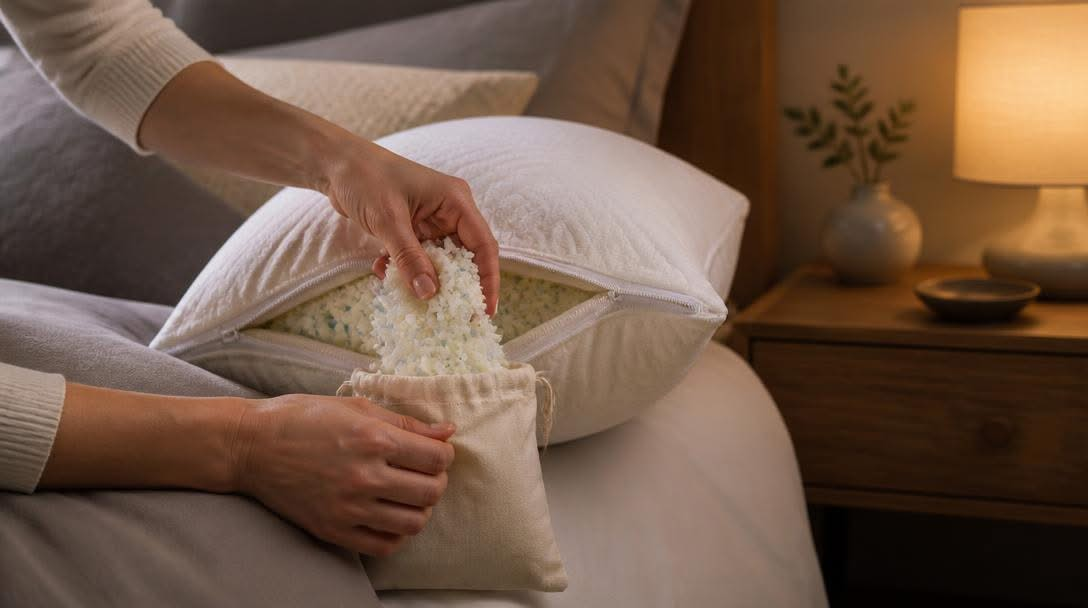
Sleep Foundation’s best adjustable pick, filled with shredded memory foam and down alternative, medium feel, at roughly $75–$85. Adjustable fill is the most practical choice if you’re not sure what height you need: start full, then remove fill a handful at a time until your neck sits level.
4. Layla Kapok Pillow: best for pressure relief
Picked by Sleep Foundation for pressure relief, this blends shredded memory foam with kapok fiber and is adjustable, at about $109–$129. The fill is soft and moldable, which makes it a good fit for combination sleepers who switch between back and side and want a pillow that reshapes as they move.
5. Eli & Elm Cotton Side-Sleeper Pillow: best high-loft option
Sleep Foundation’s best pick for side sleepers. It has a curved, relatively high-loft shape designed to sit against your shoulder, with an adjustable blend of shredded latex or memory foam and polyester, at about $115–$124. If you have broad shoulders and every pillow you try feels too flat on your side, this is the type to look at.
Simple Habits That Help Your Neck at Night
- Do a two-week test. Give a new pillow a couple of weeks (or longer, per McMaster’s advice) and keep a quick note of morning stiffness so you’re judging by results, not by feel on night one.
- Hug a pillow or use a knee pillow. On your side, a pillow between your knees or in your arms stops you rolling forward and twisting your neck.
- Keep your arm out from under your head. Sleeping with an arm jammed under the pillow is a habit that’s hard on both your shoulder and neck.
- Watch your daytime posture too. Mayo Clinic lists hunching over screens, looking down at your phone and reading in bed as common causes of neck strain. If you work in bed, read my post on working from bed first.
- Replace tired pillows. Sleep Foundation suggests swapping out a pillow every couple of years; feather pillows sooner.
If you want a simple nightly routine that covers your pillow, room and wind-down habits in one place, grab my Free Sleep Checklist.
When to See a Doctor About Neck Pain
A pillow is a comfort fix, not a treatment. Mayo Clinic says to contact a healthcare professional if your neck pain is severe, doesn’t get better after a few days, spreads into your arms or legs, or comes with a headache, numbness, weakness or tingling. Get emergency care for severe neck pain after an injury, like a car crash, dive or fall.
It’s also worth seeing a doctor or physiotherapist if you wake up with neck pain most mornings no matter what pillow you use, if pain is keeping you from sleeping, or if you also snore loudly, gasp at night or feel exhausted during the day. Those last ones can point to a sleep disorder rather than a pillow problem, and a doctor or sleep clinic can sort that out.
Frequently Asked Questions
What type of pillow is best for neck pain?
There’s no single best type, but the strongest research signal so far is for latex (rubber) pillows, and the right height for your sleep position matters most. Side sleepers usually need a higher, firmer pillow; back sleepers a medium, contoured one; stomach sleepers a very thin one.
Can a pillow cause neck pain?
It can contribute. Harvard Health notes that a pillow that’s too high or stiff keeps your neck flexed overnight and can cause morning pain and stiffness. A pillow that’s too flat lets your head drop, which strains side sleepers’ necks.
How long does it take to get used to a new pillow?
Expect a few nights to a few weeks. Some people feel a bit worse at first. Judge it after several weeks: if your morning stiffness hasn’t improved, try a different height or fill, ideally within the return window.
Are cervical pillows worth it?
They can help back sleepers and side sleepers who stay in one position, but the evidence for specialized pillows is limited. An adjustable pillow set to the right height is often just as good and more forgiving if you move around.
Is it better to sleep without a pillow if my neck hurts?
For most people, no. Sleep Foundation says sleeping with no pillow is a poor choice. The exception is stomach sleepers, who may do better with a very thin pillow or none under the head.
The Bottom Line
The best pillow for neck pain is the one that keeps your head level with your spine in the position you actually sleep in. Get the height right first, choose a fill that holds its shape (latex and shredded foam are good places to start), give it a few weeks, and see a doctor if the pain sticks around, spreads or keeps you up at night. A better pillow won’t fix everything, but waking up without that knot in your neck is worth the effort.
Sources
- Sleep Foundation, Best Pillows for Neck Pain (updated October 2026; medically reviewed by Jenny Iyo, DPT)
- Harvard Health Publishing, Say “good night” to neck pain
- Mayo Clinic, Neck pain: Symptoms and causes
- Clinical Biomechanics (2021), The effects of pillow designs on neck pain, waking symptoms, neck disability, sleep quality and spinal alignment in adults: a systematic review and meta-analysis
- McMaster Optimal Aging Portal, A pain in the neck! Does a specialized pillow really help?


