

Waking Up to Pee at Night? What Nocturia Means
When I worked rotating shifts, I had a habit I didn’t think twice about. Coming off a night shift, I’d finish a big bottle of water on the drive home, crawl into bed with the blackout curtains drawn, and then wonder why I was up to pee two hours later. I blamed day sleep. It took me an embarrassingly long time to connect the bottle to the bathroom trip.
If you’re waking up to pee at night, sometimes the explanation really is that simple. But not always. Frequent urination at night has a medical name, nocturia, and it’s one of the most common reasons adults wake up. It can be a harmless habit, a side effect of a medication, or a sign of something your doctor should look at, like an enlarged prostate, diabetes, or sleep apnea. Here’s what it means, what usually causes it, what you can try at home, and when it’s time to get it checked.
What Is Nocturia?
Nocturia means waking up from sleep because you need to urinate. Peeing right before bed or first thing in the morning doesn’t count.
Getting up once is common and usually nothing to worry about. Two or more times a night is where it starts to matter. The Sleep Foundation describes two or more nightly awakenings as the point where nocturia generally becomes a problem, and Cleveland Clinic notes that most people can sleep six to eight hours without needing to get up.
It’s also very common. The Sleep Foundation cites studies finding that nocturia affects around 40% of adults between 18 and 79, that some degree of it may affect up to 80% of older adults, and that roughly half of men in their seventies wake at least twice a night to urinate. Before 50, it’s more common in women. After 50, men catch up and pass them, largely because of prostate changes.
Why Waking Up to Pee at Night Is Worth Taking Seriously
It’s easy to shrug off nighttime bathroom trips as part of getting older. The trouble is what they do to your sleep, and what they can point to.
Every trip breaks your sleep into shorter chunks, and if you struggle to get back to sleep, one trip can turn into an hour of lying awake (more on that in why you wake up at 3 AM).
There’s also a safety issue: walking to the bathroom half-asleep in the dark is a fall risk. Researchers at Tampere University in Finland pooled the evidence and found that nocturia (two or more voids a night) was linked to about a 1.2-fold higher risk of falls and a 1.3-fold higher risk of fractures. Their meta-analysis of 11 observational studies, published in The Journal of Urology in 2020, also found a 1.27-fold higher risk of death among people with nocturia.
Before that last number scares you: these are associations, not proof that peeing at night is dangerous by itself. The researchers rated the evidence that nocturia causes these outcomes as very low. The more likely story is that nocturia often travels with other health problems, like heart disease, diabetes or sleep apnea. That’s exactly why it’s worth finding out what’s behind yours.
The Four Main Reasons You Pee at Night
Doctors usually sort nocturia into a few buckets. Knowing which one you’re in points you toward the right fix.
1. Your body makes too much urine at night (nocturnal polyuria)
This is the big one. The Sleep Foundation says nocturnal polyuria may contribute to up to 88% of nocturia cases. Normally, your body releases more antidiuretic hormone (vasopressin) at night, which concentrates your urine so you can sleep through. With nocturnal polyuria, too much of your daily urine gets made after dark. A common rule of thumb: if more than one-third of your 24-hour urine output happens at night, that suggests nocturnal polyuria.
Causes include drinking a lot in the evening, alcohol and caffeine, reduced vasopressin with age, untreated sleep apnea, heart failure, and fluid that pools in your legs during the day and gets reabsorbed when you lie down.
2. Your body makes too much urine all the time (global polyuria)
If you’re peeing a lot during the day and at night, the issue may be total volume. Simply drinking a lot is one cause. Poorly controlled diabetes is another: high blood sugar pulls extra water out through the kidneys, so new or worsening thirst and frequent urination are worth mentioning to your doctor.
3. Your bladder can’t hold as much
Sometimes the volume is normal but your bladder signals “full” too early. Cleveland Clinic lists overactive bladder, urinary tract infections, bladder obstruction, interstitial cystitis (bladder pain syndrome), an enlarged prostate in men, and pregnancy, childbirth, menopause and pelvic organ prolapse in women among the causes. An enlarged prostate can also stop the bladder from emptying fully, so it refills faster.
4. You’re waking up for another reason and then noticing your bladder
This one surprises people. Sometimes you don’t wake because you need to pee. You wake because of something else, like a breathing pause, a noise, pain or plain light sleep, and then your bladder grabs your attention. Cleveland Clinic also notes that waking to urinate can become a habit, even when your bladder isn’t actually full.
Many people have a mix of these, which is why a doctor will want some data before guessing.
The Sleep Apnea Connection
This is the cause I’d most want readers to know about, because it’s so often missed. Sometimes the real culprit isn’t the prostate or the bladder. It’s the airway.
The Sleep Foundation notes that nocturia shows up in up to 50% of people with obstructive sleep apnea. When your airway collapses and you strain to breathe, pressure changes in your chest stretch the heart, which releases a hormone (atrial natriuretic peptide) that tells your kidneys to dump salt and water. Add the constant micro-awakenings apnea causes, and you get a lot of bathroom trips.
Treating the apnea often helps. A 2023 systematic review by Di Bello and colleagues in Sleep Medicine Reviews, summarized by UroToday, found that in the 12 studies measuring nocturia before and after CPAP or airway surgery (713 patients), nighttime voiding dropped by about 50% on average. The evidence has limits, but it’s a strong reason to rule apnea out. Cleveland Clinic also lists not using a prescribed CPAP as a cause.
I use a CPAP myself (the full story is in What Is Sleep Apnea?). If you snore loudly, your partner has noticed you stop breathing, or you wake up exhausted no matter how long you sleep, mention the bathroom trips to your doctor too. A home sleep apnea test is often the first step.
Medications and Habits That Make It Worse
Before you assume something is wrong with your bladder, look at what goes into your body in the evening.
- Evening fluids. A big glass of water, a cup of tea, or soup at dinner all add up a few hours later.
- Caffeine and alcohol. Both the Sleep Foundation and Cleveland Clinic recommend limiting them, especially in the afternoon and evening. Both increase urine output, and both make your sleep lighter.
- Diuretics (“water pills”). These are prescribed for blood pressure, heart failure and swelling. Taken late in the day, they’ll keep working into the night. Cleveland Clinic suggests taking them on waking or at least six hours before bed, but check with your doctor or pharmacist before changing when you take any medication, and never stop one on your own.
- Swollen ankles. If your legs puff up by evening, that fluid gets reabsorbed when you lie down and ends up in your bladder.
If you like a warm drink before bed, keep it small and caffeine-free, and have it earlier rather than right at lights-out. My guide to herbal teas for sleep has a few options, but a big mug of anything is still a big mug of fluid.
How Doctors Figure Out What’s Causing It
The single most useful thing you can bring to an appointment is a bladder diary (also called a frequency-volume chart). Cleveland Clinic describes it as a record of what you drink, how often you pee, and when. Your doctor may also give you a measuring container that sits in the toilet so you can record the volume each time.

Keep it for a few days, ideally including a weekend. Write down:
- What and how much you drink, and when (including alcohol and caffeine)
- Every time you urinate, with the time and roughly how much
- When you went to bed and when you got up for the day
- Any medications and when you took them
- Whether you woke because you needed to go, or woke for another reason and then went
The diary shows whether you’re making too much urine overall, too much at night, or small amounts often, which maps onto the four buckets above.
Your doctor may also do a physical exam, urine and blood tests (infection, blood sugar, kidney function), and sometimes imaging to see whether your bladder empties fully, then refer you to a urologist or sleep clinic if needed.
What You Can Try at Home
If there’s no red flag (see the doctor section below), these low-risk changes are worth a two-week trial. Keep the diary going so you can tell whether they help.
| If your pattern is… | Likely culprit | Try first |
|---|---|---|
| Big volumes at night | Evening fluids, alcohol, leg swelling, sleep apnea | Shift fluids earlier, legs up in the evening, ask about apnea |
| Big volumes all day | Drinking a lot overall, possible blood sugar issue | See your doctor, especially with new thirst |
| Small amounts, often | Overactive bladder, prostate, infection | Cut caffeine, pelvic floor work, get checked |
| Wake first, then go | Light sleep, noise, apnea, habit | Fix the bedroom and sleep schedule, screen for apnea |
Move your fluids earlier, don’t cut them
The goal isn’t to drink less overall. Dehydration causes its own problems, and concentrated urine can irritate the bladder. Instead, front-load. Drink most of your fluids in the morning and afternoon, then taper off in the two or three hours before bed. If you’re thirsty, take small sips rather than a full glass.
Put your feet up in the evening
If your ankles swell by evening, the Sleep Foundation suggests elevating your legs for an hour or more before bed, so that fluid gets processed while you’re still awake rather than at 2 a.m. Cleveland Clinic also mentions compression stockings during the day. If the swelling is significant, ask your doctor first, since it can signal a heart, kidney or vein problem.
Strengthen your pelvic floor
Pelvic floor exercises help with urgency and bladder control in both men and women. The Sleep Foundation notes that a typical program involves several sessions a week for at least four months, ideally guided by a pelvic floor physical therapist. It’s slow, but it works best when you stick with it.
Protect your sleep
If you’re waking first and noticing your bladder second, better sleep is the fix. A cool, dark, quiet room, a steady wake-up time, and less screen time in the evening all help. If your sleep schedule is all over the place, start with my guide on how to fix your sleep schedule. My free sleep checklist covers the bedroom basics on one page.
Making Night Trips Safer
While you work on the cause, make the trips themselves safer, especially if you’re older or on medication that makes you drowsy.
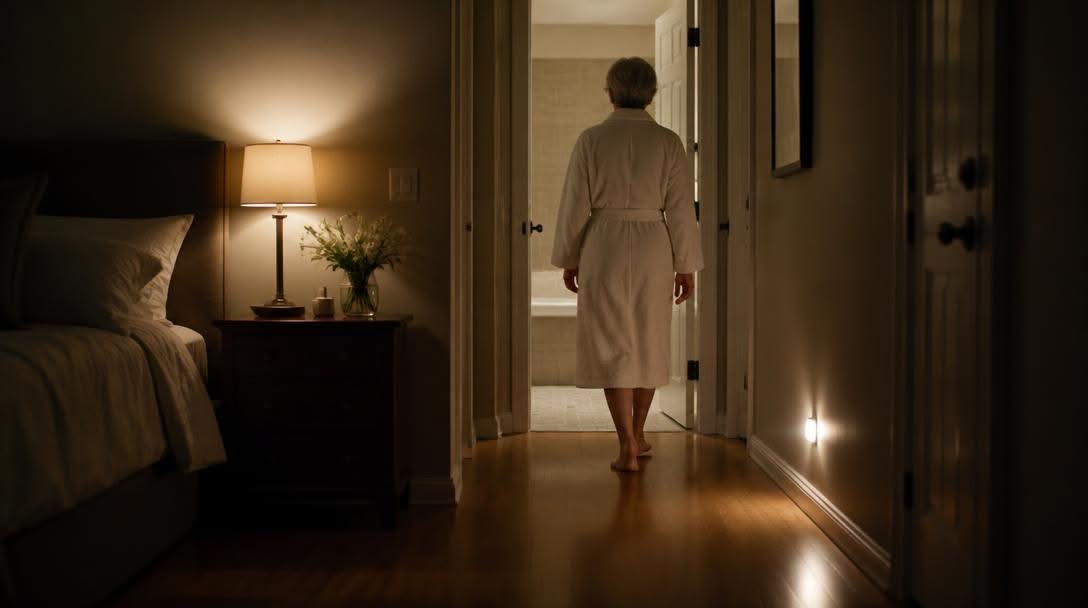
- Use dim, low night lights. Motion-activated, low-wattage lights along the floor light your path without blasting your eyes awake. Avoid flipping on the bright bathroom light if you can.
- Clear the path. Move throw rugs, cords, shoes and laundry out of the way between your bed and the bathroom.
- Sit up slowly. Sit on the edge of the bed for a few seconds before standing, especially if you take blood pressure medication. Getting up too fast can make you lightheaded.
- Wear non-slip slippers on smooth floors, and leave your phone alone on the way back to bed.
Medical Treatments Your Doctor Might Suggest
When lifestyle changes aren’t enough, treatment depends on the cause. That might mean treating an enlarged prostate with medication or surgery, managing diabetes or heart failure, adjusting the timing of a diuretic, or starting CPAP for sleep apnea.
Cleveland Clinic also lists bladder-relaxing medications for overactive bladder and desmopressin, a synthetic version of the antidiuretic hormone that reduces nighttime urine. Both are prescription drugs with real side effects, and older adults need careful monitoring, so that’s a conversation for your doctor. If you take over-the-counter sleep aids or supplements, check with your doctor or pharmacist too, since some can make you groggier on the walk to the bathroom.
When to See a Doctor
Nocturia is usually very treatable, but it’s worth getting checked rather than living with it. Make an appointment if:
- You’re getting up two or more times most nights
- It’s leaving you tired during the day or it bothers you
- It started suddenly or is getting worse
- You’ve tried the home fixes for a few weeks without improvement
Get seen sooner if you notice any of these along with it:
- Burning or pain when you pee, fever, or cloudy or bloody urine
- Unusual thirst, weight loss or fatigue (possible blood sugar problem)
- Swollen legs or ankles, or shortness of breath when lying flat
- A weak stream, trouble starting, or feeling like you can’t empty fully
- Loud snoring, gasping, or a partner noticing you stop breathing
- Leaking urine, or a fall on the way to the bathroom
Bring your bladder diary and a list of everything you take, including supplements. If sleep apnea is on the table, ask about a sleep clinic referral.
Frequently Asked Questions
How many times a night is normal to pee?
Getting up once a night is common, especially as you get older. Most experts consider two or more times a night to be nocturia, and that’s when it’s worth looking for a cause, particularly if it leaves you tired.
Why do I pee more at night than during the day?
Usually because your body is making more urine at night than it should. Common reasons include evening fluids, alcohol, caffeine, fluid from swollen legs being reabsorbed when you lie down, less antidiuretic hormone with age, and untreated sleep apnea.
Should I stop drinking water before bed?
Taper off rather than stopping completely. Drink most of your fluids earlier in the day and have only small sips in the two to three hours before bed. Don’t cut your total intake so much that you get dehydrated.
Can sleep apnea make you pee at night?
Yes. Nocturia shows up in up to half of people with obstructive sleep apnea, and treating the apnea often cuts nighttime trips down.
The Bottom Line
Waking up to pee at night is common, but you don’t have to put up with it. Move your fluids earlier, cut evening caffeine and alcohol, put your feet up before bed, and keep a bladder diary. If you’re still up twice a night after a couple of weeks, or anything on the warning list applies, see your doctor. The cause is often fixable.
Sources
- Sleep Foundation. Nocturia.
- Cleveland Clinic. Nocturia. Medically reviewed, updated July 2026.
- Pesonen JS, Cartwright R, Vernooij RWM, et al. The Impact of Nocturia on Mortality: A Systematic Review and Meta-Analysis. The Journal of Urology, 2020;203(3):486–495. DOI
- Tampere University. Nocturia associated with risk of early death (summary of Pesonen’s doctoral research on falls, fractures and mortality).
- UroToday. Chipping Away at Nocturia by Treating Sleep Apnea (commentary on Di Bello et al., Sleep Medicine Reviews, 2023).