How to Clean Your CPAP: A Simple Daily and Weekly Routine
For the first few months on CPAP, my cleaning routine was simple: I didn’t have one. I’d rinse the mask when I remembered, top up the water tank with whatever came out of the tap, and leave the hose coiled on the nightstand until it looked a bit cloudy. Nobody had really sat me down and explained how to clean a CPAP. The respiratory therapist mentioned it, I nodded, and then I went home exhausted from years of rotating shifts and wanted the machine to just work.
It did work. But the mask started leaving a red, greasy mark on my face, the tank grew a white crust, and the air had a faint plastic-and-something smell I didn’t love breathing all night. Once I settled into a proper routine, those problems went away, and the whole thing takes less time than making coffee.
This guide is that routine. It covers what to clean every morning, what to clean once a week, what to stay away from (including the gadgets that promise to do it for you), and when to replace parts instead of scrubbing them. It’s based on guidance from the FDA, the American Academy of Sleep Medicine, Cleveland Clinic and Resmed, plus what I’ve learned living with a nasal-pillow mask. One rule sits above everything here: your machine’s user manual wins. Models differ, and the manufacturer’s instructions are what your warranty is based on.
Why Cleaning Your CPAP Matters
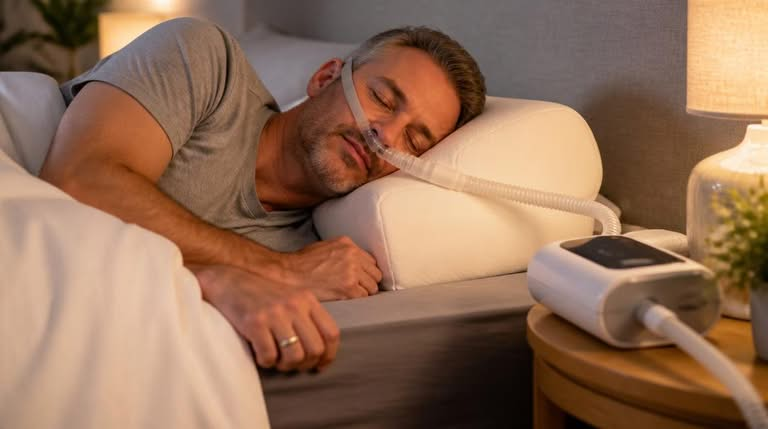
Your CPAP pushes warm, humidified air through a mask that sits on your face for seven or eight hours a night. That’s a pretty good recipe for skin oil, dead skin, dust and moisture to build up in places you can’t see.
Here’s the honest picture of the risks:
- Skin problems and a worse seal. Cleveland Clinic sleep specialist Jennifer Brubaker, PhD, APRN-CNP, points out that you may develop acne or skin irritation if the mask or straps aren’t clean. Oil on the cushion also breaks the seal, which means leaks, noise and less effective therapy. If you’re fighting leaks, a dirty cushion is one of the first things to rule out, along with the other causes in my post on snoring with a CPAP.
- Worn-out parts. Grime and the wrong cleaning products wear out silicone and straps faster, so they lose their grip and stretch.
- Infection risk: real, but don’t panic. The research here is mixed. A 2017 study in Sleep Science (Mercieca et al.) swabbed the noses, masks and humidifiers of 137 people with sleep apnea, 66 of them CPAP users, and found no significant difference in sinus infections, chest infections or pneumonia admissions between people who used CPAP and people who didn’t. Humidifier use didn’t change infection rates either. On the other hand, a 2025 case report in Cureus described a man with existing lung disease who developed Pseudomonas pneumonia after admitting he hadn’t been following CPAP cleaning guidance and had seen green growth on his mask. One case doesn’t prove a pattern, but it’s a good reminder that water and warmth grow things if you let them sit.
So the goal isn’t a sterile operating room. The goal is clean, dry parts and fresh water every night, which a basic routine handles easily.
What You Need (It’s a Short List)
You don’t need special kits or sprays. Cleveland Clinic and Resmed both describe the same basics:
- Mild, unscented liquid soap. Plain dish soap without moisturizers, antibacterial agents or heavy fragrance.
- Warm water. Warm, not boiling. Resmed suggests about 30°C (86°F), and Cleveland Clinic lists boiling water among the things to avoid.
- A clean basin or sink you’ve rinsed out first.
- A clean towel to lay parts on, and somewhere to hang the hose.
- Distilled water for the humidifier tank.
- White vinegar (optional) for the weekly tank soak, if your manufacturer allows it.
That’s it. Everything else is optional or, as you’ll see below, something to avoid.
Your Daily CPAP Cleaning Routine (About 5 Minutes)
I do this first thing in the morning, right after I take the mask off, so everything has all day to dry.
1. Unplug and take it apart
Unplug the machine. Disconnect the mask from the hose, and the hose from the machine. If your mask has a separate cushion or nasal pillows, pop them off the frame.
2. Empty the humidifier tank
Pour out last night’s water. Don’t top it up. Standing water that sits warm all day is exactly what you want to avoid. Resmed’s daily guidance is to empty the tub, wipe it with a clean disposable cloth and let it air-dry out of direct sunlight.
3. Wash the mask cushion or nasal pillows
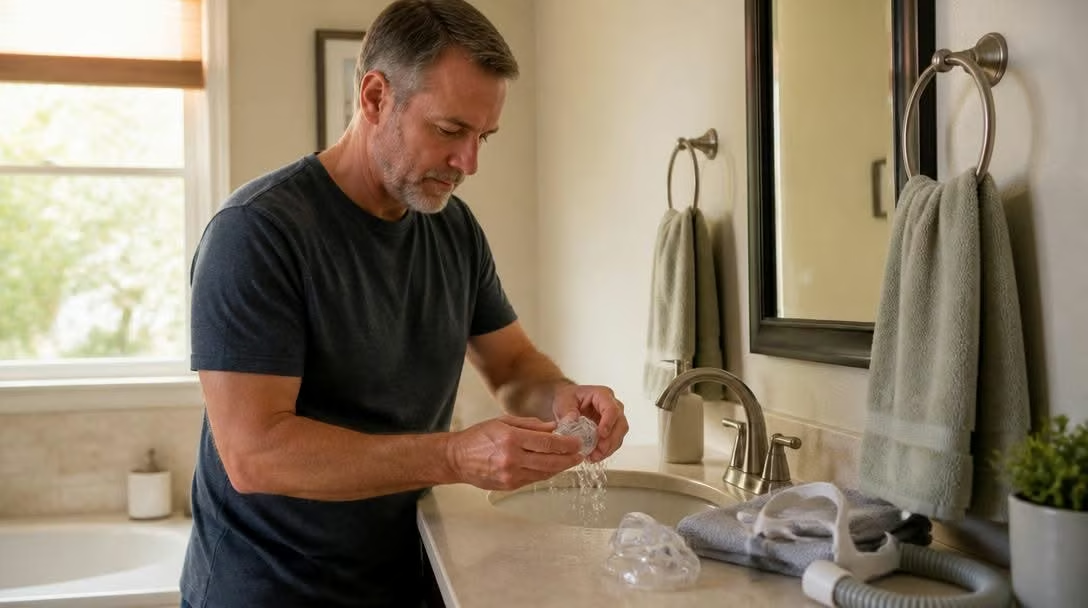
This is the part that touches your face, so it gets washed every day. Use a few drops of mild soap in warm water, gently rub the cushion with your fingers to break up the skin oil, then rinse well with clean water. Cleveland Clinic recommends washing the whole mask daily; Resmed says the cushion daily and the frame weekly. Either way, the cushion is non-negotiable.
4. Air-dry away from sunlight
Lay the parts on a clean towel and let them dry on their own. Keep them out of direct sun, which can break down silicone over time. Don’t reassemble anything while it’s still wet.
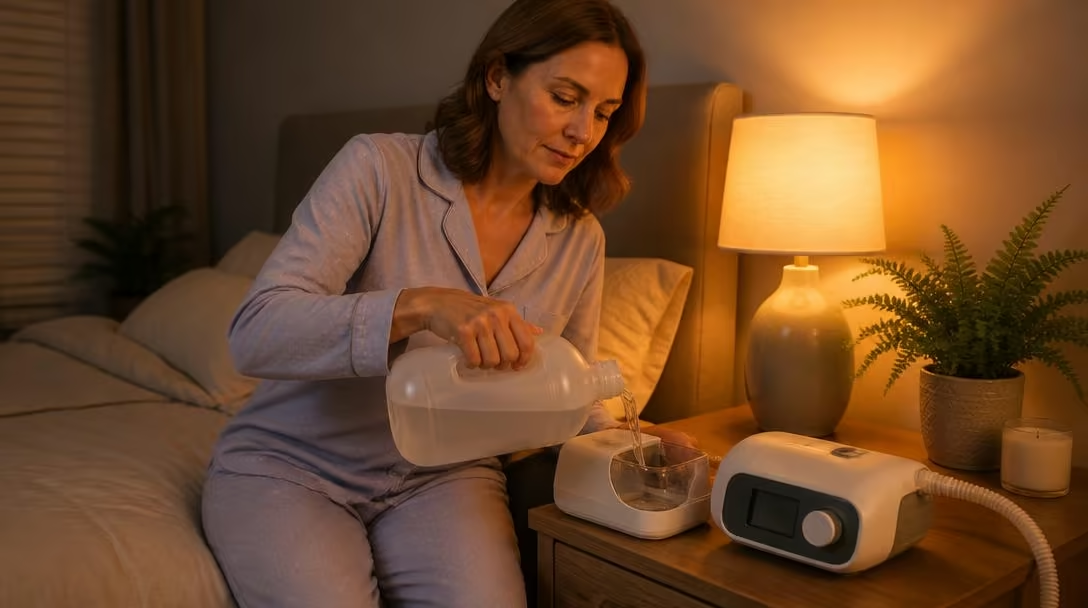
5. Refill with distilled water before bed
At night, fill the tank with fresh distilled water to the fill line, then put everything back together. Distilled water is what Cleveland Clinic’s routine calls for, and it keeps mineral scale from building up in the tank. That crusty white ring I used to get was tap-water minerals. It’s also one of the tips I wish someone had drilled into me on day one, as I mentioned in my sleep apnea story.
Your Weekly Deep Clean
Once a week, give everything a proper wash. I do mine on Sunday morning, so it’s dry well before bedtime.
The hose (tubing)
The hose is easy to forget, and it’s the part most likely to hold moisture. Cleveland Clinic’s method:
- Add a drop of mild soap and fill the hose with warm water.
- Hold both ends and slosh it back and forth.
- Drain it, then rinse with clean water until no more bubbles come out.
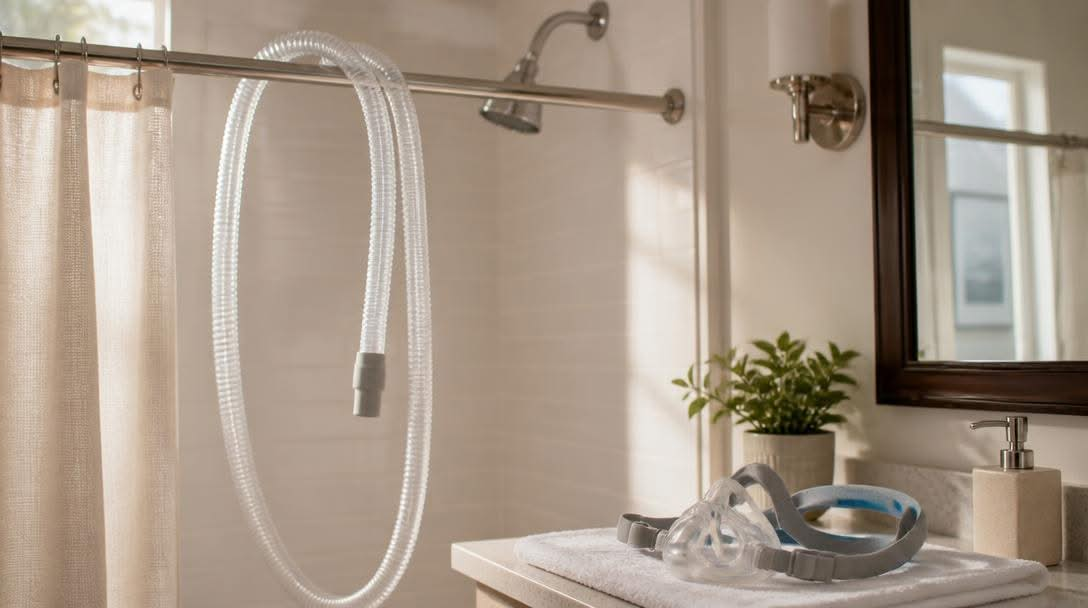
- Hang it to air-dry so water drains out both ends. A shower rod or a hook on the back of a door works well.
If you have a heated hose, check your manual. Most say not to submerge the electrical connector end.
The humidifier tank
Wash it in warm soapy water, or soak it in a vinegar solution if your manufacturer allows it, then rinse thoroughly and air-dry. Be aware that sources give different vinegar ratios: Resmed suggests 1 part white vinegar to 9 parts water, while Cleveland Clinic suggests equal parts vinegar and water for a 20-minute soak. That’s exactly why the manual is the tiebreaker. Some tanks can go in the dishwasher and many can’t, so check before you try it.
When you’re done, the tank should look clear, with no discoloration. Resmed’s guidance is that a clean tank should look clean, clear and free of discoloration. If it stays cloudy or stained after cleaning, it’s time to replace it.
Headgear and mask frame
Hand-wash the headgear and frame in warm soapy water, rinse and lay flat to dry. Resmed warns that washing machines and dryers are likely to cause damage, and that headgear shouldn’t be ironed. (Cleveland Clinic notes some fabric headgear can be tumbled to tighten it up; again, follow your manual.)
The filter
Machines use either disposable filters (usually white) or reusable ones (usually grey or foam). Disposables get replaced, not washed. Reusable filters can be rinsed or soaked in warm soapy water, rinsed, blotted and left until completely dry before they go back in. A damp filter in a running machine is a bad idea.
The machine itself
Unplug it and wipe the outside with a soft, slightly damp cloth. The FDA is clear on this: never put a machine with an electrical cord in water.
Your CPAP Cleaning and Replacement Schedule
Here’s the whole routine on one page. The replacement column is Resmed’s general guide; your insurer or equipment supplier may use a different schedule, so check with them.
| Part | Clean | Typical replacement |
|---|---|---|
| Mask cushion / nasal pillows | Daily | Monthly |
| Humidifier tank | Empty daily, wash weekly | Every 6 months |
| Mask frame | Weekly (daily is fine) | Every 3 months |
| Hose / tubing | Weekly | Every 3 months |
| Headgear | Weekly | Every 6 months |
| Air filter | Rinse weekly if reusable | Monthly (disposable); per manual (reusable) |
| Machine exterior | Wipe weekly | As advised by your supplier |
Cleveland Clinic’s guidance on filters is a little broader, replacing them every one to three months, so treat these numbers as a starting point rather than gospel.
What NOT to Use on Your CPAP
This list matters as much as the routine itself. Cleveland Clinic and Resmed both warn against:
- Bleach or chlorine
- Rubbing alcohol
- Antibacterial or moisturizing soaps
- Scented or dyed cleaners, and essential oils, which can irritate your airways and damage the plastic
- Boiling water
- Washing machines and dryers for mask parts and tubing
Cleveland Clinic also points out that using the wrong cleaning solutions or methods may void your warranty. That’s worth knowing before you get creative.
What about CPAP cleaning machines (ozone and UV)?
You’ve probably seen ads for boxes that “sanitize” your CPAP overnight with no washing required. Here’s what the regulators say.
In 2020, the FDA issued a safety communication about CPAP cleaners that use ozone gas or ultraviolet light, which the AASM shared with its members. The FDA said these products weren’t legally marketed in the US for cleaning CPAP equipment and that their safety and effectiveness were unknown. It had received reports of breathing problems linked to ozone cleaners, and its preliminary testing found ozone levels above safe limits even after the recommended wait time. It also warned that UV products could cause burns or eye damage, and that their UV output varied so much that equipment might not be properly disinfected.
The FDA’s current consumer guidance (updated in 2024) repeats the core message: ozone and UV cleaners can damage hoses and masks, ozone can leak into your home, and the FDA has authorized only one add-on device, for bacterial reduction on specific masks and hoses. Even that is meant to supplement the manufacturer’s cleaning instructions, not replace them. Resmed also notes that ozone exposure may damage the inside of its machines over time and that this isn’t covered by its warranty.
My take: soap and water costs almost nothing, works, and is what every manufacturer recommends. If you’re thinking about a cleaning gadget anyway, talk to your sleep clinic or equipment supplier first.
When to Clean More Often
Cleveland Clinic recommends cleaning more often when you have a cold, COVID-19 or another respiratory infection. During a cold, I wash the whole mask and empty and dry the tank every day, and do the hose more than once that week.
It’s also worth stepping up the routine if:
- you see any discoloration, film or growth on the mask, hose or tank
- the air smells musty or “off”
- you notice water collecting in the hose overnight
- you’re getting skin irritation where the mask sits
If cleaning doesn’t fix it, replace the part.
Common CPAP Cleaning Mistakes
- Topping up the tank instead of emptying it. Yesterday’s water sits warm for another day. Empty, dry, refill fresh.
- Reassembling everything wet. Trapped moisture is the problem you’re trying to solve. Give parts time to dry fully.
- Forgetting the hose. Out of sight, out of mind. Put it on the calendar.
- Using “stronger” cleaners. More aggressive isn’t better here. It damages the silicone and can leave residue you then breathe.
- Cleaning instead of replacing. A stretched cushion or a cracked tank won’t seal or clean properly no matter how much you scrub. Replacement parts are part of the deal.
- Washing your mask but not your face. Washing your face before bed means less oil on the cushion to begin with. A clean pillow cover helps too (more on that in my guide to CPAP pillows).
If you like having routines like this written down, my Free Sleep Checklist puts the nightly habits that matter in one place.
When to Talk to Your Doctor or Sleep Clinic
A clean machine is only useful if the therapy is working. Contact your doctor, sleep clinic or equipment supplier if:
- you get frequent sinus infections, chest infections or a persistent cough while using CPAP
- your skin stays irritated or broken under the mask even with clean equipment
- your daytime sleepiness, snoring or other apnea symptoms come back
- you have constant leaks, or your mask no longer fits
- you’re unsure which cleaning products or methods your specific machine allows
Don’t change your pressure settings yourself. If something feels wrong, the data your machine records is exactly what your sleep team wants to see. If you’re still on the fence about whether you even have sleep apnea, start with how home sleep apnea tests work.
Frequently Asked Questions
How often should you clean a CPAP?
Wash the mask cushion (or nasal pillows) and empty the humidifier tank every day. Once a week, wash the hose, tank, headgear and mask frame, rinse a reusable filter and wipe the machine. Always follow your machine’s manual where it differs.
Can I clean my CPAP with vinegar?
Many manufacturers allow a diluted white vinegar soak for the humidifier tank. Ratios vary, from about 1 part vinegar to 9 parts water (Resmed) to equal parts (Cleveland Clinic), so check your manual and rinse thoroughly afterwards.
Can I use tap water in my CPAP humidifier?
Distilled water is the usual recommendation because tap water leaves mineral deposits in the tank. Check your manual; if you’re travelling and can’t get distilled water, your manufacturer’s instructions will tell you what’s acceptable.
Is it safe to use a SoClean or other ozone CPAP cleaner?
The FDA has warned that ozone and UV CPAP cleaners can damage equipment, and that ozone exposure has been linked to breathing problems. It has authorized only one add-on cleaning device, and even that doesn’t replace regular washing. Soap and water is the safe, recommended method.
Can a dirty CPAP make you sick?
It’s possible. A 2025 case report linked pneumonia to poor CPAP hygiene in a man with existing lung disease, but a 2017 study of 137 people found no difference in respiratory infections between CPAP users and non-users. Regular cleaning keeps the risk low. See your doctor if you get repeated infections while using CPAP.
Can I put CPAP parts in the dishwasher?
Only if your manufacturer says that specific part is dishwasher-safe. Many aren’t, and heat can warp seals and silicone.
The Bottom Line
Learning how to clean a CPAP takes one read-through; doing it takes about five minutes a day and twenty minutes a week. Wash the cushion and empty the tank every morning, give everything a proper soap-and-water wash once a week, use distilled water, skip the harsh chemicals and ozone boxes, and replace parts on schedule. Your mask will seal better, your skin will thank you, and you’ll know the air you breathe all night is as clean as it can be. It took me a few months of bad habits to figure that out. Hopefully it takes you one morning.
Sources
- U.S. Food and Drug Administration. Continuous Positive Airway Pressure (CPAP) Machine Cleaning (consumer update, 2024).
- American Academy of Sleep Medicine. FDA issues safety communication on CPAP cleaning devices that use ozone or ultraviolet light (2020).
- Cleveland Clinic. How to Clean a CPAP Machine.
- Resmed. Cleaning CPAP equipment.
- Mercieca L, et al. Continuous Positive Airway Pressure: Is it a route for infection in those with Obstructive Sleep Apnoea? Sleep Science, 2017.
- Mando N, et al. Pseudomonas Unmasked: Poor CPAP Hygiene Leads to a Case of Pseudomonas Pneumonia. Cureus, 2025.